political campaigns

Oct 142013
 
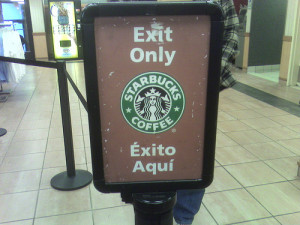
The Spanish text translates to "Success Here".

“Success Here”.

Hint to anyone trying to court Spanish-speaking customers, businesses or voters: if you address us in Spanish, make sure you do it correctly.  It can be quaint when a non-Spanish speaker memorizes a short message in Spanish, and we’ll be forgiving, thought it’s overdone and a bit boring.  But if you are going to produce Spanish-language materials, get a professional Spanish-language copywriter and proofreader/editor.  Or at least, hire someone who has had formal education in the language.  Spanish is a beautiful language with rather strict grammatical and spelling rules, you can’t just wing proper writing.   When your Spanish-language materials are poorly translated and full of spelling and grammatical errors, the message you convey is that you are going through the motions but you don’t really care about Spanish speakers.  Our language, just like us, deserves respect.

Now, don’t get me wrong. This is America. English is the dominant language. I don’t expect that everything will be translated. But if it’s going to be, it should be done well.

This has come up twice recently on my Facebook page.

A couple of weeks ago, Mayor Stephen Cassidy touted a new city-issued Spanish language flier advertising no business license fees for new businesses. It was full of grammatical and spelling errors that have not yet been corrected.  The Spanish language flier describing the program sounds like it was translated by software, and not only is ungrammatical, but makes little sense.

Today, Congressional candidate Ro Khanna announced a Spanish language version of his website that suffers from the same problems.  He assured me that a “professional” had done the translation, but there are so many grammatical and spelling mistakes that it’s hard to believe a human looked at it at all.

Personally, I don’t think either the City of San Leandro or Khanna’s campaign should be excused.  The Bay Area does not lack competent Spanish translators and copywriters.   With a plethora of universities around us, it cannot be hard to find trained writers and translators.  Sure, they may be a little bit more expensive than Google Translate, but using them will assure an end product that actually communicates a message.   If that message is worth communicating, then it’s worth hiring someone who can do it.

As it stands, the Spanish translations offered by Cassidy and Khanna look to me like little more than gimmicks meant to say to the community as a whole “look, we care about Latinos”, while telling Spanish-speaking Latinos “don’t mind that, we don’t actually mean it”.

Oct 082013
 

Furloughed Federal Workers Protest Government Shutdown“In the general course of human nature, a power over a man’s subsistence amounts to a power over his will.”
Alexander Hamilton, Federalist 79

There is a growing movement of people who are clamoring for members of Congress to forgo their pay checks during the shutdown.  Some (mostly wealthy) Congress members have heeded this call, loudly proclaiming they’ll refuse their paychecks or give them to charity.  At first glance, this call makes sense.  Why should members of Congress get paid when so many federal employees are not?  And shouldn’t we punish Congress for putting us in this situation and not passing the budget?  Congressional challenger Ro Khanna put it succinctly:  “There ought to be consequences for Congress’s inability to do its job.”

I suppose that you can say that Congress, as a whole, is not doing its job.  We are experiencing a fundamental failure of democracy and I hope that the powers that be can devise changes in Congressional mechanisms to not put us here again.  But can we fairly accuse individual members of Congress of the same?  After all, if the job of a Congress member is defined as “pass a budget”, then our Democratic representatives could easily accomplish this by giving in to Republican demands to curtail the Affordable Care Act.  As a Democrat and a citizen, however, that’s not what I want.   What I want is for my Democratic Congress members to stand firm against Republican blackmail.  Sure, I might want the guys on the other side to “do their job” and pass this budget cleanly, but I want it to be because they listen to their own constituents and realize that’s what they want as well.  The job of a representative is to represent.  The consequences of not doing so are felt, every two years, at the ballot box.

I am particularly disturbed by the implication that we should be blackmailing our own Congress members into doing something other than what people have elected them to do.  Ultimately, what Khanna and others are asking is that we put Congress members in a position of choosing between their duties to their constituents and their needs to pay the mortgage, put food on the table and keep their kids in ballet lessons.  That is a horrible choice, one that harms our system at the very core.  In this case, it’ll be a choice that could lead to the demise of Obamacare.

It is also an unfair choice, one that will ultimately lead to only those who are independently wealthy – or who have well off spouses – to be elected, as they would be the only ones able to resist the economic blackmail we’d have introduced.    We already have too many very rich people in Congress, and the wealthier get wealthier while the poor get poorer.

While nothing stops our Representatives from donating their paychecks to charity (though Christian ethics would have them do their charity quietly, rather than announcing them to the world), the XXVII amendment does stop Congress from passing any legislation to reduce Congressional pay until a new Congress is elected.  This is exactly to prevent dangerous demagogy from winning the day in situations like this.  That said, the pressure to give up salaries is very strong, particularly when fueled by challengers like Khanna that see it as an easy way to score political points.  It is important that our Congress members resist that pressure, not just for themselves but for their less-wealthy colleagues.

I am proud of Barbara Lee, Mike Honda, George Miller, Mike Thompson, Jerry McNerney,  Anna Eshoo,  Zoe Lofgren and Sam Farr and many other Democratic members of Congress for holding strong on the Affordable Care Act.  I’m also proud of them for keeping their pay.  I urge them to continue to do so.

Aug 132013
 

hondastemI like Ro Khanna, but I’m still backing Mike Honda

Of the three Congressional races in Alameda county, only one, so far, is worthy of attention: the one between Ro Khanna and Mike Honda for CD 17.  No serious candidate is likely to challenge Barbara Lee for CD 13, and while Ellen Corbett is challenging Eric Swalwell in CD 15, she’s doing it so quietly that every time I see her I feel like asking her whether she’s still running.

Honda and Khanna, on the other hand, have both taken onto the campaign trail with gusto.  They are active in social media, they issue press releases and stage press events right and left.   Honda is meeting with constituents while Khanna has his coffees, walks and other events.  Indeed, it’d be easy to get campaign exhaustion by just reading about all their doings.

In past elections, such flurry of activity by a challenger might have gone unnoticed, such is the power of incumbency.  But Pete Stark‘s defeat by newcomer Eric Swalwell after California switched to a top-two open primary system, has put the fear of the election gods in the hearts of incumbents throughout the state.   And while Mike Honda is a popular politician with a solid record who shouldn’t have to worry even today – Ro Khanna is young, has energy, the Obama campaign team, almost two million dollars in the bank and seemingly the ability to raise even more astonishing amounts of money.  So Honda is nervous.

His nervousness was clear last week when he challenged Khanna to support an expansion of social security.  Khanna quickly countered that he supports raising the limit on salary contributions to make social security solid, before talking about expansion.  With the two in the same corner, the issue fizzled out.

This week, Honda got the endorsement of MoveOn.  Given that it comes about 8 months too early, I can only imagine that it’s another sign that Honda is nervous and he wants something, anything, to mobilize his supporters and, more importantly, his contributors.  Indeed, he quickly sent an e-mail to supporters announcing the endorsement and asking for money.  While Honda has done a reasonable job at fundraising, his base are ordinary folks and unions (during his 2012 campaign, retirees and human rights professionals were among his five top “industry” contributors).  Khanna depends greatly on Silicon Valley billionaires.   Khanna, meanwhile, is making a point that he is not taking money from PACS – which he can afford to do given how wealthy his private donors are.

The news that 90% of MoveOn members on his district chose to endorse Mike Honda is not particularly noteworthy.  Honda is as reliable a progressive vote as you can possibly want in Washington.  He may not have been particularly effective, but no progressive has been in the last decade.  At least he votes the right way.

Ro_Canvass_01Chances are that Khanna will too.  The political philosophy he has espoused has not differed much from Honda’s.  Rather than on political differences, Khanna’s campaign will rest on his youth and energy, his yet-to-be-announced fresh ideas, his ability to inspire and motivate people (Khanna has not only won the favor of the Silicon Valley upper crust, he has also been building a very strong grass root movement of people who really believe in him) and his potential of becoming a liberal counterweight to Paul Ryan and even the tea-party ideologues in the Senate.

That potential is what makes Khanna so exciting as a candidate and so potentially dangerous as a challenger.   Mike Honda’s personal story, that of a child who grew up in a Japanese internment camp and went on to serve his country in the Peace Corp, before coming a teacher and a politician – touches voters because they convey the image of a man who is not only good, trustworthy and humble, but who also has a rock-solid moral code.  “Do you know why I support human rights?,” he asked me when I thanked him for past votes.  “Because I am human.”  It sounds corny, but when Honda says it, you realize that it’s ultimately that simple.

Khanna’s personal story may not be as compelling, but it provides elements that suggest just as solid a foundation for his personal democratic values and commitment to social justice.  His grandfather worked for Indian independence as part of the Indian freedom movement and was jailed for his writings in numerous occasions.  He continued his political work after independence.  It becomes clear when talking to Khanna, how much his grandfather’s struggle for freedom affects his own political path.  At the University of Chicago, Khanna studied not only Economics but political Philosophy.  You get the impression that this is a man who not only has read Plato, Aristotle,Voltaire, Montesquieu, Payne and the Federalist papers, but understands how the principles of the Enlightenment can and should be applied to our modern democracy.  Khanna’s erudition and passion – which so far has mostly shown up on matters of economic policy – may very well be the future of the Democratic party.

And yet, Honda may have less to worry about than he seems to think.  For all his potential, Khanna still remains an open question.  There is much promise, but promises are not always fulfilled.  I am sure I am not the only one that wishes that Khanna had ran against Eric Swalwell, who is the epitome of an unprincipled politician.  If he had, I would have supported him with all my heart.  But in this day and age, when our civil liberties have been eroded to the point of total destruction, I don’t have the guts to take the chance that Khanna will be all he promises.  I’ve been burn so much by politicians in the past.  I daresay that a majority of the voters in CD 17 will feel the same.

Khanna may be great, but Honda is really good and a sure bet.  It’s true, Silicon Valley entrepreneurs are bigger gamblers than I, but then again, they also seldom vote.

Update: A friend asked me whether I thought Ro Khanna would win.  This article sort of answers that questions, but let me share what I told her.  I think that unless there is a major scandal, Mike Honda is safe in 2014.  Ro Khanna’s money gives him a shot to tell his story, but I don’t know that he can build a message that is compelling enough for many to choose him over Honda.  Interestingly, Khanna’s major strength is not his money, but how charismatic he is in a one-to-one situation.   He has the power to really inspire people.  But a year does not give him enough time to meet enough voters in person to convince them.

My gut feeling is that if he loses in 2014, Khanna will run again in 2016 and he will have a very good chance of winning.  Three years campaigning will give him enough time to meet practically every voter face to face.  Mike Honda is also charming but he is in Washington for much of the year and he seems unlikely to walk door to door to sell his message directly to voters.  Local elections, anyone will tell you, are won by those who knock on doors.

Moreover, after the 2014 election, voters are more likely to pay attention to what Honda is accomplishing in Washington.  If Republicans retain control of the House, that won’t be much.  In addition, after 8 disappointing years of Obama, I daresay most voters will be ready for a change, a desire that will likely trickle down to lower offices.

Khanna is a smart man, he took a big risk when he decided to go after Honda.  Going after Swalwell would have been much easier.  To me, that means he’s in it for the long run.  He wants that specific seat and he will get it – he may just have to wait three years for it.


Apr 042013
 

They say that the early bird gets the worm, and this year politicians are taking that to heart.  Candidates started announcing they would run for the 2014 elections even before the 2012 votes were counted, and every day more candidates join the fray.  So far this is how the field looks.

In San Leandro:

– Councilmember Diana Souza, who is getting termed out,  is rumored to be ready to challenge Mayor Stephen Cassidy for Mayor.  This one is hard to believe, but I’ve heard the rumor from the same person who correctly predicted that Hermy Almonte would challenge Jim Prola, another unlikely and predictably unsuccessful race.

Pauline Cutter is likely to run for re-election for City Council District 5.  Board of Zoning Adjustments member Lee Thomas will run for the District 3 Souza is vacating while my husband, Mike Katz-Lacabe, has pulled papers to run in District 1 (Michael Gregory terms out).  Mike has not yet announced.

Tony Guzman, who runs the Ford Leadership in San Leandro and has been getting progressively into politics, is flirting with the idea of moving to San Leandro and running for City Council (he currently lives in Hayward).  He definitely should move, but he may be better off joining a commission first to learn a bit about how this city works.

Meanwhile, Planning Commissioner Ed Hernandez seems ready to apply to be appointed to the District 2 seat if Ursula Reed vacates it.

Lance James seems likely to run for re-election for the School Board (representing the north area). Ron Carey, who represents the Manor, will not be seeking a second term. Carey was appointed to his seat after nobody run in the 2010 election. Currently, five of the seven school board members were appointed or ran unopposed.

In Alameda County:

– San Leandro Councilmember Ursula Reed is running for County Superintendent of Schools.
Ellen Corbett is challenging incumbent Eric Swallwell for Congressional District 15 (read more about this race).
Ro Khanna is challenging incumbent Mike Honda for Congressional District 17 (read more about this race).
– Dublin Mayor Tim Sbranti is running for Assembly District 16 (Joan Buchanan terms out).
– Fremont Assemblymember Bob Wieckowski is running for Senate District 10.

Statewide:

– State Treasurer Bill Lockyer and State Controller John Chiang were looking at exchanging jobs, as each gets termed out of their current ones. Chiang is set to run for Treasurer but, still recovering from the Nadia scandal, Lockyer is being coy as to whether he’s running for Controller (but he’s preparing to).  Meanwhile, Board of Equalization member and rising Democratic party star Betty Yee is giving it her all in the race for Controller. This one will be fun to watch.

Do you know of other candidates or other races?Comment below or e-mail me!

Feb 272013
 
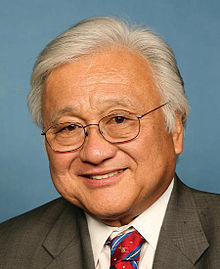
Congressman Mike Honda

Congressman Mike Honda

The battle for California CD 17 promises to be intense.

Don’t mess with Congressman Mike Honda.  He may look soft and cuddly, he may be one of the darlings of the human rights movement, but the man is a force to be reckoned with. Don Corleone could have learned a thing or two from this Silicon Valley congressman.

Mike Honda’s take-no-prisoners approach to politics came into play in the last few weeks, after former Obama administration official Ro Khanna fed rumors that he is considering running for CD 17 in 2014.  Khanna originally planned to run for CD 15 and had amassed a $1.2 million war chest towards that end, but he’d given sitting congressman Pete Stark his word that he wouldn’t run against him.  Stark refused to retire and after an abysmal re-election campaign, he was defeated by a young, unknown, first-term city councilman, Eric Swalwell.   Khanna, apparently, started looking south.

Honda was swift in his response to a possible challenge from Khanna. Within days he announced his endorsement by President Obama and House Minority Leader Nancy Pelosi, soon followed by those of Rep. Steve Israel, Chair of the Democratic Congressional Campaign Committee and Howard Dean, the past Chair of the Democratic National Committee.  After the San Jose Mercury News quoted a political science professor in favor of the proposition that a key indicator of Khanna’s chances would be whether the Congressional Asian Pacific American Caucus endorsed Honda or remained neutral, the Chair and 19 members of the Caucus expressed their support for their chairman emeritus.

Khanna’s supporters have attempted to interpret these unusually early endorsements as “signs of [Honda’s] fear and desperation” at the prospect of their guy entering the race.   But they are actually a demonstration of Honda’s political acumen.   Khanna’s credibility as a candidate is largely based on his fundraising talent and his DC political connections – which his campaign has repeatedly touted.  By announcing these endorsements, Honda makes it very clear to would-be Khanna backers that Khanna no longer enjoys the support of the Democratic power structure in Washington.  Support him at your own peril.
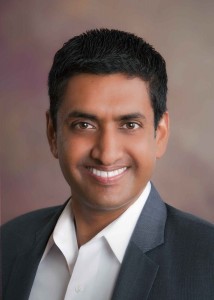
Ro Khanna

Ro Khanna

Despite his million dollar campaign chest, Ro Khanna will need a lot of support to have a chance to win.  Though Khanna supporters have emphasized the fact that redistricting has left Honda with low name recognition and voter loyalty in much of CD 17, Khanna has practically none of either.   To overcome this, he will need to build grass roots support from the ground up.  He needs volunteers to knock on doors, make phone calls and throw “meet the candidate” events .  He also needs to develop a sophisticated media strategy and raise a lot more money.  Honda has already started.  To make sure he’s available to voters, he has opened satellite offices in Fremont and Newark.  He updates his Facebook page often, tweets regularly and even blogson the Patch.  He introduces and pushes high-profile legislation, which means his name is often in the press.  He is ready for a fight, and has already announced his campaign team for the 2014 election.

Much of Khanna’s support so far has come from the Indian-American community, but it came with the presumption he would run for an open seat in CD 15.   Challenging Mike Honda is another matter altogether. As Varun Nikore, past president of the Indian American Leadership Initiative, told India Abroad:  ” [Honda] has done an enormous service to the Indian-American community and continues to do so.  He’s mentored countless numbers of Indian-American politicians across the county including Ro.  Not because he had to, but because Mike Honda so deeply believes in this cause of empowerment for not only Indian Americans, but for all Asian Pacific Americans…  We cannot let the ambitions of one trump loyalty here.  If we start going after our friends, who will stand with us in future battles to come?  Our successes as a community didn’t just come because an Indian American was at the table fighting for our rights and causes.  We were helped by leaders in the larger Asian Pacific American community who helped build broad coalitions and represented our community in our issues, like Patsy Mink, Daniel Inouye, Norman Mineta and Mike Honda.  We would be nowhere without them.” Echoing the sentiments, newly elected Indian American congressman Ami Bera told the publication that “in recent years, Mike Honda has done more than any member of Congress to help support and grow Asian-American representation in the House of Representatives.  Congressman Honda was instrumental in helping me and other Indian-American candidates build out our races, and gain credibility.  He has always been there for us, raising funds, providing advice, and being a mentor.”  Bera has apparently been trying to dissuade Khanna from challenging Honda, with little success.

While Khanna’s supporters acknowledge that he might have lost the support of the Indian-American community nationwide, they trust they can build on the relationships Khanna has made with Silicon Valley and southern Alameda County South-Asian-Americans.   And he’s likely to have at least some success at that.  Unlike Honda, whose job, after all, keeps him in DC for much of the year, Khanna actually lives and works in the Bay Area and thus he should be able to spend much more personal time cultivating relationships, in particular with those members of the Indian-American community that have not been politically active.   A “meet and greet” that three South-Asian-American supporters are throwing for him in early March has over 50 “going” responses on its Facebook page.

In person, Mr. Khanna comes across as an intelligent, well spoken, well educated and thoughtful young man, and he is sure to impress many who meet him.  Each event like this will likely win him supporters who will themselves throw further events to introduce him to more community members.  And while “meet and greet” and “coffee with the candidate” events are not meant to be fundraisers, they often become that, which should help his finances.

Khanna can also benefit from the many political splits within the local Indian-American community which will guarantee him the support of at least one faction in Fremont.  But he can also take advantage of ethnic/religious splits.    For example, he signed on to a letter written by supporters of Gujarati Chief Minster Narendra Modi, asking Mike Honda to withdraw his signature from a letter asking the State Department to continue denying Modi a visa to come to the US.  Modi has been denied a visa because of his involvement in the 2002 riots.  According to Human Rights Watch, the so-called riots, which resulted in the deaths of up to 2,000 people, mostly Muslims, were “planned in advance and organized with extensive participation of the police and state government officials.”  UPDATE Ro Khanna has reached out to clarify that the letter he wrote only asked Honda to meet with Indian-Americans to discuss this issue. He did not ask him to remove his signature.  I apologize for the error.

Khanna’s other fundraising success came from his connections in Silicon Valley.  He works as an attorney at Wilson Sonsini Goodrich & Rosati, a business and intellectual property law firm headquartered in Palo Alto, and for two years was as a Deputy Assistant Secretary for the Commerce Department, where he got kudos for his work.   He has recently published a a well-received book on the future of American manufacturing.    Support from Silicon Valley donors, however, is likely to be strategic – and Khanna will have to make a very good case that he has something to offer them that is worth antagonizing Honda, the President and the Democratic party leadership.

Honda, meanwhile, is working hard to take on the mantra of modern manufacturing from Khanna.  Two days after President Obama announced on his State of the Union speech that he wanted to establish three more manufacturing innovation hubs in different parts of the country, Honda sent him a letter making a case for why one should be located in his district.  The next day, he published  an op-ed in the San Jose Mercury News, co-written with Silicon Valley entrepreneur Kevin Surace, on how Congress can revive American manufacturing.  The clear message is “you don’t need Khanna, I’m on top of this”.  To be fair,  this is not a new area of concern for Honda; last July he introduced a bill also aiming to boost domestic manufacturing.

Khanna, for his part, has also been throwing himself into Honda territory.   Khanna also had an op-ed in the Feb. 15th issue of the San Jose Mercury News, his on the subject of the growing conflict between China and Japan over the Senkaku/Diaoyu islands. The op-ed was co-written with Peter Stanek and Ignatius Y. Ding, two activists with an organization that seeks reparations from Japan for WWII crimes.   In the past, both of them have supported Mike Honda, in particular on his efforts to get justice for comfort women.  Khanna’s play for the Chinese-American vote, however, seems clumsy.   In the op-ed he argues that China, and not Japan, is America’s most important trade partner and he suggests that the US should not back Japan on this dispute.   This stance might gain Khanna some Chinese-American votes, though it seems unlikely that a significant portion of the electorate would vote on a US congressional election based on that particular issue.  Moreover, it may prove divisive within the broader Asian-American community and suggest to general voters that Khanna doesn’t have the stomach to stand up to China when needed.

Khanna supporters have been encouraged by Eric Swalwell’s defeat of Pete Stark in CD 15 and emphasize the similarities between the races, namely, the age difference between both candidates and the effects of redistricting.  Both are red herrings, however.  Pete Stark’s age only became a factor in his campaign because his behavior made voters – and the press – question his mental competency.  Even his supporters acknowledged that he was no longer effective.   There is no question, however, that Honda is mentally spry and that he is one of the most influential members in Congress; not everyone can call the President and get an immediate endorsement two years before a race (by contrast, Obama only endorsed Stark three weeks before the 2012 primary election).

Redistricting, moreover, does not appear to have hurt Honda.  While Stark was left with a district that now includes much wealthier and conservative areas, the demographics of Honda’s new district are not significantly different.  Indeed, he won CD 17 with 73.5% of the vote, 5 points more than what he received in his last election in then CD 15.

Eric Swalwell was able to win his election on the strength of the Republican and conservative votes that he openly courted.   But he only succeeded at this because there was no Republican candidate in the race (Chris Pareja, a tea partier, ran as an independent).  Khanna will not be that lucky.  Evelyn Li, who ran against Honda in 2012, seems ready for a rematch.   If she’s able to keep her 27.6% of the primary election vote, Khanna will be left having to convince a third of all the people who voted for Honda in 2012, that he is no longer their man.  That’s a pretty high bar.

And it’s a bar that Eric Swalwell was not able to pass himself.   When everything was said and done, Swalwell was only able to carry roughly 14% of former-Stark voters.  Only in those cities that had not previously been represented by Stark,  Swalwell was able to gather a third of the vote that had previously gone to the Democratic candidate for Congress.  Khanna will have to make those numbers in all the cities in his district, and against an opponent that is willing and able to fight hard.

Can Khanna do it?  Perhaps.  For one, he might get very, very lucky and be able to uncover some very deep, dark secret from Honda’s past.  And, of course, there is always the possibility that Honda may mess up big time, though, given his district, it will have to be something worse than a weiner tweet, bathroom footsie or shirtless photos on Craigslist.

Absent that, instead of running against Mike Honda, Khanna may consider running against Paul Ryan.   In other words, Khanna could concentrate on building his own political persona, and hope that it can overshadow Honda’s on the ground.  Khanna’s background is in economics, and he has already been seen on national TV news shows talking about manufacturing.  If he is able to develop his own economic policy for the country, one that provides a credible, progressive answer to Paul Ryan, he may be able to use the power of the national media to bring even more attention and credibility to himself.   Khanna can actually benefit from having been spurned by the Democratic leadership, as this frees him to write a plan focused only on what’s best for the country and the American people.  Khanna might also want to hit Honda at his core on the issue of education reform, though he will have to develop a plan that makes sense for his district.

While the road to victory will be long and arduous, Khanna does have an ace in his pocket: the local media.   Both the San Jose Mercury News and the San Francisco Chronicle are salivating at the possibility of a Honda-Khanna race (which has even grabbed the attention of the New York Times).  Not only have both papers been leaning to the right lately, but a race of this type is sure to generate a lot of copy.  Khanna has been developing a good relationship with both papers’ political reporters, so he probably can count on a lot of good press.  And if Khanna can do it, and win on the merits of his platform, he will arrive in Washington with the credibility and gravitas of a true leader and not of just a good fundraiser.