Margarita Lacabe

Jan 242014
 

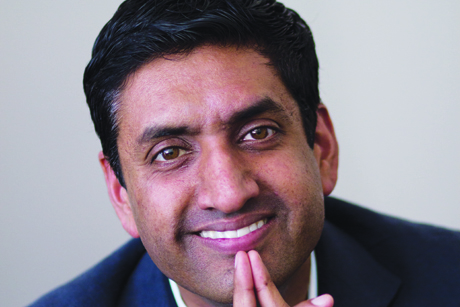
Ro Khanna

Here is Why

For the second time in less than two years, I am shifting my public support from a political candidate to his opponent.  I did it in 2012 when, after having endorsed Rob Bonta for California Assembly, I learned that Abel Guillen‘s political views more closely aligned with mine.  I am doing so again now, by announcing my endorsement of Ro Khanna, who is running against Mike Honda for Congress in CD 17.  My reasons for switching this time are very different.

I have the utmost respect for Mike Honda.  His record of supporting human rights and civil liberties, while advocating a progressive agenda,  is exemplary.  You can count on Honda to vote the right way almost every time.  Indeed, I think it says a lot that before this election, his biggest source of campaign contributions were human rights activists.

Honda, moreover, is an extremely pleasant legislator, well-liked by everyone who knows him.  He has done very important work, in particular seeking justice for Japan’s comfort women and standing up for American Muslims.  At first thought – and second and third and fourth – the idea of endorsing someone else seems crazy.  And, indeed, it has taken me several months of careful thought to come to this decision.

I’ve come to it because while I am deeply appreciative about everything that Mike Honda has done in Congress, I think that Ro Khanna can and will do even more.  Khanna is a one-in-a-generation sort of politician, a statesman-in-the-making who combines intellectual brilliance with a thorough understanding of our economic and political realities and a clear vision of what this country needs to advance.  He is pragmatic about what can be accomplished in our current political environment, has concrete plans on how to reach out to legislators from all political persuasions, but he’s clear as to what is not up for compromise (things like human rights or a woman’s right to choose).

More importantly, Khanna is both convincing and inspiring.  Khanna profoundly believes that the job of government is to promote the general welfare and it is a job it can get back to doing well.  He believes in the political philosophy of the founding fathers, and in their dream of America as the political heir to Athens.  When you hear him speak, his unique mix of optimism and pragmatism quickly becomes contagious.  I fell under his spell when I interviewed him last year and you can notice similar reactions in journalists and bloggers who’ve interviewed him at length.   It’s this effect which provides him with an ideologically-diverse base of financial and other support.   Watch, for example, how emotional football legend Ronnie Lott becomes when speaking to Khanna about his expectations for his candidacy.

It’s been difficult to ignore, however, the parallels between Ro Khanna and Barack Obama.  Obama also spun beautiful webs when running for office – he spoke about hope and restoring the rule of law,  only to go back on pretty much all of his promises as soon as he was in office.  Khanna started his political career walking precincts for Obama, and his current campaign is being run by Obama former operatives.  For months, I’ve feared that Khanna was also a con.

But fears are ultimately prejudices, and neither I nor the country can afford to dwell in them.   In reality,  Khanna has been consistent on the political philosophy he’s expressed throughout the years.  He first ran for Congress in 2004,  as a statement of opposition to the war on Iraq and the Patriot Act.  He has made it clear in interview after interview that he believes civil liberties are the cornerstone of democracy and that we must support them at home and abroad.   People whom I respect and have known Khanna for far longer than I, believe he is the real deal and offer their support.   Chief among them is Lawrence Lessig, a law professor and director of the Edmond J. Safra Center for Ethics at Harvard University.  Lessig is one of the foremost advocates of political reform in America, and has written and spoken widely on the corrupting influence of money in politics.  I respect his opinion greatly.  I also respect the opinions of teachers like Cheryl Cook-Kallio.  Ro Khanna started volunteering in her classroom almost a decade ago because, he told her, his life had been changed by a teacher.  She was proud to tell me how Khanna wrote a recommendation to the University of Chicago, his alma matter, for one of the students he mentored.  That student just graduated law school and passed the bar.

Finding a person with the intellectual acumen, knowledge base and political, social and ethical values that Ro Khanna spouts is rare.  Finding such a person who actually wants to get involved in politics and has the commitment and desire to make a difference, is rarer still.  Finding someone with all those qualities that can also inspire others is almost impossible.   As much as I like Mike Honda and appreciate the work he’s done, I want to see Ro Khanna have the chance to prove himself in Congress.  For that reason, I endorse him.

I am not thrilled, however, about some of the positions that Khanna has taken – for example, concerning Congressional pay – and I have been disappointed at some of the childish antics that both campaigns have displayed.  My public endorsement of Khanna will not prevent me from criticizing his policies and postures in the future.  It should also put any criticisms I make of Honda into context.

Marga Lacabe

—


Full Disclosure: Khanna was one of the several politicians and labor groups who contributed to the slate of candidates with which I ran for Alameda County Democratic Central Committee in 2012.

Jan 222014
 
John Perez

John Perez

Betty Yee

Betty Yee

Today I got a call from Assembly speaker John Pérez’ campaign. He’s running for State Controller and wants my vote for the Democratic endorsement.

My plan, at this point, is to vote to endorse Betty Yee. Yee is currently a member of the State Board of Equalization. I have heard her speak and she’s definitely a budget wonk. She’s had a number of budget-related jobs in the past, and she strikes me as someone who is careful and by the book. Still, I don’t know her very well.

Speaker Perez, OTOH, strikes me mostly as a political animal for what should really be a non-political job.

Still, I was elected to represent all Democrats in AD 18 to the Democratic Party and I’d like to hear from you whom you’d like me to vote to endorse and why.  You can e-mail me at margalacabe@gmail.com, tweet me at @SanLeandroTalk or comment on my Facebook page.

Jan 212014
 

turbineThe Heron Bay Homeowners Association is set to win the lawsuit they filed against the City of San Leandro, concerning the City’s decision to give a height variance to Halus Power Systems to build a wind turbine tower on their property, for research and testing purposes.  The HOA objected to the turbine for aesthetic reasons, but grounded their legal pleadings on assorted – though very weak – environmental concerns.  Still, the judge overseeing the case issued a tentative ruling (TR) granting the HOA’s petition that Halus obtain an environmental impact report  (EIR) on the project.  The EIR would cost Halus hundreds of thousands of dollars and may very well prompt the small wind turbine company to move out of San Leandro.

The City is challenging the tentative ruling and a hearing has been scheduled for February 11.  Judge Evelio Grillo, somewhat unusually, did not post the actual contents of the TR online and, instead, only e-mailed it to the lawyers.  It’s thus impossible to actually comment on his reading of the case.  However, it’s rare for a judge to change his position once a TR is filed.  Best known as the judge in the Jahi McMath case, Grillo has a reputation for being smart and “by the book.”  Still, the City’s attorney – in particular, Meyer Nave‘s Edward Grutzmacher, who seemed to be the principal litigator in this case – didn’t precisely  ingratiate himself to Grillo by getting involved in petty legal shenanigans early in the procedures.   Now, Halus and San Leandro taxpayers may be paying for their lack of professionalism.

When plaintiffs sue a city under the California Environmental Quality Act (CEQA), they need a copy of the administrative record detailing all the  proceedings on the matter before the different City bodies. This has to be assembled and certified by the City and the plaintiff must pay for it. The City estimated that it would cost between $4800 and $6200, which the plaintiff’s lawyer accepted. The City started compiling the record, but did so at a slow pace.  There are  e-mails after e-mails from the plaintiff’s lawyer asking for updates on the status and cost estimates of the compilation.  Replies by Grutzmacher were less than responsive.   Finally, Grutzmacher said the record was ready but the HOA’s attorney could only have it  after delivering a $24K+ check.  He contended that it had taken 187 paralegal hours to compile the record, each charged at $125/hour.   He would not, however, give an actual accounting of how they came up to that amount and instead held the record hostage – though at one point, he gave the HOA’s attorney a one-time, take-it-or-leave-it opportunity to get the record for about $20K.    Finally, the HOA’s attorney had to ask the Court to force the City to give them the record.  The Court ruled that they could have it upon payment of $6200.

While I am the Heron Bay’s HOA number one critic – I thinks this lawsuit is an abuse of process, based purely on prejudice and animus by the HOA’s leadership -, the behavior of the lawyer representing the City was just as contemptible.  The impression I got after reading the e-mail exchange between Mr. Grutzmacher and the HOA’s lawyer, was very much that Mr. Grutzmacher was playing a game: first denying the HOA’s lawyer the information he needed, then holding the record hostage by demanding an absurd amount of money, and then, when the HOA’s lawyer asked for an explanation of the charges, by falsely claiming that the HOA lawyer wanted to get the whole thing for free.  Mr. Grutzmacher’s behavior on e-mails and pleas was not only childish, but offensive. We can speculate how the judge reacted to Grutzmacher’s attempt at gamesmanship.

We will not know Judge Grillo’s reasons for ruling for the HOA until the hearing – unless one of the parties decides to release the brief or some enterprising journalist goes to the trouble of obtaining it -, but we do know that it’s likely that these legal shenanigans will cost the taxpayers plenty.  If the HOA wins, the City will not only be stuck with having to pay its own attorney costs, but also the $25K Grutzmacher alleges it cost to assemble the administrative record.  It will also have to pay for the court costs and the HOA’s attorney’s fees, which are much greater than they would be if he didn’t have to spend countless hours fighting Grutzmacher over the administrative record. Once again, Meyers Nave profits from getting the City into a legal mess and the taxpayers are left to pay for it.

This was a case that the City should have won easily.   But Meyers Nave has shown that it either lacks the competence or the will to actually offer sound legal representation for the City.   Indeed, the tens of thousands of dollars their botched representation will cost this City in this case pales in comparison to the almost $3 million the City lost on the Faith Fellowship case, the $4 million+ it lost on the former Albertsons’ property case and the almost $8 million it lost on the King Family Trust lawsuit.   While these were all lawsuits that the City should not have had to face to begin with – and wouldn’t, if they had gotten competent advise from the let go -, Meyers Nave poor representation definitely did not help along the way.

I said it almost three years ago: “It’s time to fire Meyers Nave” and it’s even more true today.   San Leandro’s taxpayer money should go to pay for fixing our streets, housing our homeless and providing after-school activities for our children.  It should not go to pay for expensive lawyers who give the City bad legal advice, and then benefit when the City gets sued.


Jan 182014
 
Dr. Vanila Singh

Dr. Vanila Singh

Vanila Singh Runs for Congress to Get US Visa for Human Rights Abuser

Religious – and foreign – politics have found their way into an American congressional race, but in a completely different manner to what we are used to.  There are no Christian fundamentalists running for California’s congressional district 17, nobody pontificating against abortion or gay marriage or promising to bring prayer back to the classrooms.   Instead, we’ll be treated to two competing understandings of Hinduism.  For Democratic candidate Ro Khanna, Hinduism is one more aspect of his cultural identity which informs, rather than defines, his vision of the state as secular and pluralistic.  For newcomer and potential spoiler Republican candidate Vanila Singh, on the other hand,  Hinduism appears to be the cornerstone of her political identity.   For the incumbent, embattled liberal Congressman Mike Honda, a man of indeterminate religious beliefs, Singh’s entrance in the race cannot come at a better time.

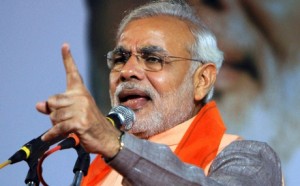
To the average American, even the average non-South Asian voter in CD 17, the name Narendra Modi may not immediately ring a bell.   But this Gujarati politician and self-described Hindu nationalist is posed to become the next Prime Minister of India – and the main sideshow attraction in the CD17 race.   Modi was Chief Minister of Gujarat during the violent 2002 riots which left over 2,000 Muslims dead, including children burnt alive.  Modi’s administration has been accused by human rights organizations and researchers,  not only of supporting the violence, but of planning it and then working diligently to derail any possibility of justice.

Narendra Modi

Narendra Modi

The Gujarati riots incensed human rights activists and supporters of religious freedom worldwide so when Modi announced, in 2005, that the would visit the United States for a conference, a coalition of  activists and evangelicals formed to lobby the State Department to deny him a visa.  They obtained the support of many members of Congress and were eventually successful.  While the visa denial may seem like a small gesture, it incensed Modi and his supporters, who have since been working to get the US government to change its stand.

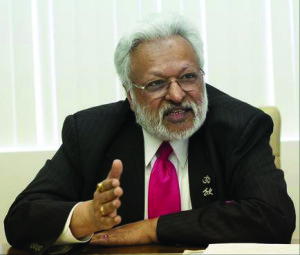
One of Modi’s biggest and richest backers in the US, is the Chicago-based Punjabi tycoon Shalabh ‘Shalli’ Kumar.  Kumar has set out to get that visa for Modi and is not afraid to use his money – and that of other Indian nationalists in the US – to do it.  He co-founded a Super PAC to recruit and fund Republican candidates that support a “pro-India platform”, the main element of which is helping Modi get a US visa.  Kumar told India West that he approached Singh due to her volunteer work with the Hindu American Foundation (HAF), a pro-Modi group with Hindu-supremacist links.   Singh apparently accepted, changed her voter registration from “declined to state” to Republican, and filed.

With 435 districts to chose from, one may wonder why Kumar chose to focus on a district that is not only heavily Democratic, but which already has a Hindu candidate.  Not only does a Republican have no chance to get elected – the Republican candidate only got about 27% of the vote in the 2012 general election -, but Singh’s candidacy jeopardizes Ro Khanna’s chances of winning.  While Khanna is not a supporter of Modi – he says he’s committed to both secularism and pluralism -, he has taken a hands-off approach on this matter and is willing to defer to the State Department’s decision.  Honda, meanwhile, has lobbied the State Department to make sure that Modi is continued to be denied a visa.  Surely, Kumar is doing himself no favors by helping Honda win this race.

Shalabh Kumar

Shalabh Kumar

Kumar’s strategy, however, seems to be more devious.  He told India West that his Super-PAC would have backed Khanna if Khanna had been an independent “free of Pelosi’s whip” and willing to sign on to the “pro-India” agenda mentioned above.  We can surmise that there were conversations on this issue between Kumar and Khanna that did not leave the former satisfied.    Indeed, Khanna’s fundraising success along a broad donor base and his commitment to not accept contributions from PACs, makes him uniquely immune to the promises/threats of deep pocket special interests like Kumar.  Clearly, another strategy was in order.

As Kumar told India West, “it’s a very challenging formula to take down Mike Honda without active Republican support.”  Indeed, while CD 17 is a new district for Honda, he benefits from a considerable incumbent advantage, which Khanna can only overcome by receiving at least some Republican and moderate votes.  A poll conducted last August by a pro-Honda group, had Honda receiving 49% of the total vote.  That was less than the 57%  a different poll gave him in March, but still considerably higher than the 15% Khanna had.  While Khanna will have had a full year of campaigning under his belt by the time the June primaries hit this year, if Singh is able to garner the great majority of the Republican vote, in addition to the likely limited Hindu fundamentalist vote, her candidacy might actually threaten Khanna’s ability to get the second-highest percentage of votes in June and make it to the general election in November.  Khanna could innoculate himself somewhat against this danger by encouraging another Republican to run – hoping that will split the Republican vote -, but Kumar’s deep pockets, added to those of other Hindu nationalists in Singh’s circle, will give Singh a considerable advantage.  If nothing else, Singh’s candidacy can take time and resources away from Khanna’s mission of explaining why he’s a better choice to Mike Honda.

While Singh’s entrance into the race is problematic in that it subverts American democracy, Kumar’s actions underline the pernicious effects of PACs in American elections.  Unwittingly, they also serve to test Khanna’s moral core and his quality as a candidate in a way that is seldom possible for newcomers.  If Khanna stands firm and still wins, he will go to Washington as a less naive Mr. Smith, but one with as much integrity.

Note: This article has been edited for clarity.

Jan 152014
 
Diana Souza

Diana Souza

And, more importantly, “Can she win?”

San Leandro City Council member Diana Souza is playing the old “will I, won’t I” game vis a vis running for Mayor.

On the one hand, she has been seeking the endorsement of highly placed Democrats. On the other hand, when asked in so many words whether she’s running for Mayor, she’s denied it.

While it’s likely that what she is doing is trying to assess whether she can garner enough political support to mount a credible challenge to Mayor Stephen Cassidy, she hurts her credibility by not being straight about it.  If she does decide to run, that lack of honesty may come to haunt her.

Mayor Stephen Cassidy is profoundly disliked by Central Labor and, by extension, by many powerful elements in the Democratic party.  Souza may feel she can exploit this vulnerability.  However, Souza’s right wing ideology – she has opposed everything from urban farming to marijuana dispensaries to even discussing services for the homeless, while pushing for restricting civil liberties in town – is not likely to be well received within Democratic circles.  Souza’s insistence that the flag of the People’s Republic of China be flown over City Hall, also suggest that she has very poor political instincts.   Anyone endorsing Souza does so at their own peril.

Souza’s greatest problem, however, is that she is not actually a viable candidate for Mayor.  Not only does she not have a base (though she will lean heavily on Benny Lee‘s connections within the Chinese community), but she has accomplished nothing in the seven years she has served in City Council.  She ran with the single purpose of building a competitive swimming pool in San Leandro, but was unable to get this done due to opposition by the public. who wanted WW funds spent on a variety of projects.   Since then, she’s had no initiatives and has served as a vote for the Police Department.

Souza also suffers from a lack of campaign experience.  She ran in 2006 against Julian Polvorosa., an elderly barber and former Council member who had been pushed to run by former colleagues and showed no desire to actually be elected.  Souza did a good job of putting signs around town and getting relatives to drop off some fliers, but didn’t need to create the grass root organization that pushed Cassidy into his 2010 win.  She ran for re-election unopposed.

Souza will likely receive the support of the Police Union if she runs for Mayor.  However, that is a double-edged sword in San Leandro.  While she can expect thousands of dollars from them, police support of former Mayor Tony Santos was likely a key reason for why he lost the race.  Indeed, current Councilmember Jim Prola blames news stories about Police Union contributions to his campaign for loosing him votes at the polls.   She is also likely to have the support of the city employee union, but that will just remind voters of how she has put employee’s interests above those of taxpayers..

Her biggest problem, however, is that whatever dissatisfaction there is in San Leandro with Cassidy, extends to the Council as well.  For example, she – along with Cassidy – voted to have the major downtown property sold to a developer for a fraction of its value, so as to be occupied by a drugstore that already has two branches downtown.  She has also voted to give the Police Chief and City manager raises, while complaining there is no money for city services.  Making a case that she’s any better than Cassidy will be tough.

Her candidacy, however, could precipitate another candidate jumping into the race.  Any votes she takes from Cassidy, could help a non-establishment candidate take the plunge.