
Margarita Lacabe

Oct 102014
 
Mike Katz-Lacabe

Mike Katz-Lacabe

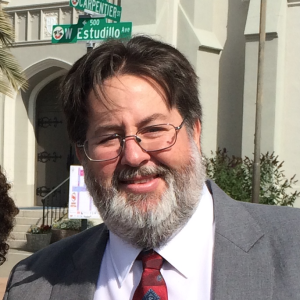
The race for City Council District 1 features four very different candidates with very diverse backgrounds.  Mike Katz-Lacabe, my husband, is an IT security professional, a twice elected member of the School Board and a human rights & privacy rights activist.   David Anderson is a retired sheet metal worker who moved to San Leandro a few years ago.  Ken Pon is a self-employed accountant, very active in the Downtown Business Association and other civic organizations.  Deborah Cox is a home maker and prodigious fundraiser, who has chaired several community organizations, mostly related to education.  They will be elected through ranked choice voting, which allows voter to rank up to three candidates in their order of preference.   In San Leandro, all voters are able to vote for all City Council and School Board seats.

My recommendations for this race are:

First Choice: Mike Katz-Lacabe
Second Choice: Ken Pon
Third Choice: David Anderson

FIRST CHOICE: MIKE KATZ-LACABE

It won’t surprise anyone that my first choice for this district is my husband, Mike Katz-Lacabe.  I could claim to be unbiased, but I can’t possibly be so.  I know him much more than any of the other candidates and I married the man, in part, because I appreciate his qualities.   Many of those qualities, though not all, will make him be a great city council member.  The best I can do for my readers  is to be as candid as possible about both his strengths and faults and let the voters decide.

Mike’s greatest strength on this race is that he’s the only candidate who knows what’s going on at City Hall.  Not only has he either attended or listened to every City Council meeting for the last four years, but he actually reads the background materials and does his own research.  That’s how he discovered that, unbeknownst to the City Council, the surveillance cameras they voted to approve would have hidden microphones.  He found out the San Leandro Police  Department would be getting an armored personnel carrier by looking through the minutes of the Alameda County Board of Supervisors.  Simply said, there is nobody in San Leandro who knows more about what’s going on in town and who is most committed to finding out what’s left hidden.

Indeed, though Mike is an unapologetic liberal, it was his knowledge and understanding of the City’s financial situation which got him the endorsement of the Oakland Tribune.  “A school board trustee, Katz-Lacabe stood out for his comprehension of the debt the city faces.”

Mike is also uncommonly intelligent and competent.  While it’s the former that I cherish most as his wife, it’s the latter which made him succeed both in the School Board and in his career.  When push comes to shove, you want people in power who can both understand the big picture and come up with solutions to short and long term problems.  The flipside is that when you are competent, people come to rely on you and you end up being pulled in too many directions.

One of the qualities that drew me most to Mike was his intrinsic morality.  He knows right from wrong, and he strives to do the former.  This is a very rare quality in a human being, much less in a politician.  He is committed to human rights, social justice and to make people’s lives better.  If he wasn’t an atheist, he’d be a great Christian.

Finally, Mike’s social skills have served him very well in the School Board and I think they will continue to do so in the City Council.  Unlike me, Mike doesn’t make many enemies.  He treats everyone with respect and receives it in turn.  He believes in the need for collaboration and therefore he doesn’t burn bridges.

I am concerned, however, about Mike’s effectiveness as a legislator.  In the School Board, he was  unable to pass progressive policies such as banning the teaching of overtly religious songs to elementary school children, de-emphasizing standardized testing and passing a district-wide research-based homework policy.

In my opinion Mike’s greatest flaw as a Board member has been his unwillingness or inability to hold the Superintendent and staff accountable for significant gaffes.  For example, when then Superintendent Cindy Cathey attended a City Council meeting to speak against marijuana dispensaries, he did not publicly call her out on this.  Cathey did it at the request of the Chief of Police and without informing the Board, which constitutes an abuse of power that merited a censure.  I can only hope Mike will take a stronger attitude towards the City Manager, if he blindsides the Council in a similar manner.

More on Mike Katz-Lacabe: Candidate questionnaire, candidate statement, Smart Voter, Facebook, comments at Council meetings, news articles quoting Mike, SL Times’ candidate profile, tweeter: @slbytes

SECOND CHOICE: KEN PON

Ken Pon is not a particularly strong candidate.  Though he is an accountant, he has demonstrated a lack of knowledge about the City’s finances.  He has not been attending City Council meetings and his knowledge of what’s going on in the City seems sketchy. He would not answer the Nextdoor/SLT candidate questionnaire.  On the plus side, Ken Pon does have legislative experience – he served two terms in the School Board – and while he lost re-election after a financial scandal, he at least understands how a body of this type works.  City Council member Ursula Reed, who had neither held elected office nor attended Council meetings before being elected, famously said that it took her a whole term to learn the job.  Pon is likely to need less time.   Pon also seems less likely to be a pawn for the City Manager/Police Chief.  He is not blindly supporting measure HH and he is not as beholden to the police union as his opponents.

More on Kenneth Pon: Candidate Statement, Smart Voter, Website, Facebook page, APA Questionnaire, SL Times’ candidate profile
THIRD CHOICE: DAVID ANDERSON

I have decided to recommend David Anderson as my third choice vote after the last candidate forum, where the differences between Anderson and Deborah Cox became clear.  While they are both conservative and pro-law enforcement, Anderson is committed on hearing what the community has to say, while Cox is mostly interested in doing what the Police tells her.  When asked how they’d vote on the City acquiring an armored personnel carrier,  Anderson said he was personally against it but would hold community fora to hear what the citizens had to say. Cox was only interested in talking to the police about it.

David Anderson and Deborah Cox would both, however,  make terrible additions to the City Council.   Neither of them has been able to articulate any specific policy or plan they would pursue if elected, neither seems to have even the most basic understanding of how the City Council and City Hall work, neither attends City Council meetings, and Cox’ only policy contributions have been to advocate against medical marijuana dispensaries (a position she abandoned when she sought the Democratic Party’s endorsement) and for the closed sale of the city-owned former downtown Albertson’s property to developer David Irmer, one of her campaign contributors.  Moreover, neither was willing/able to return the SLT/Nextdoor candidate questionnaire and at the candidate fora both candidates said nothing but platitudes, and not particularly well articulated ones. Moreover, they are both supported by the Benny Lee camp. Anderson features several photos of himself with Benny Lee on his fliers while Lee’s close associates are advocating for Cox.

More on Deborah Cox: Candidate Statement, Smart Voter, Website, Facebook page, APA Questionnaire, SL Times’ candidate profile

More on David Anderson: Candidate Statement,  Smart VoterAPA Questionnaire, SL Times’ candidate profile
Sep 262014
 
Pauline Cutter

Pauline Cutter

Pauline Cutter Best Choice, but Vote for Her Third

The following are my ranked-choice recommendations for San Leandro Mayor, as of the time of updating this article. Things can change in political races as you learn more about the candidates, which is why I don’t vote until election day.  Note that while I’m making recommendations on this race, I’m not endorsing any of the candidates. 

The race for San Leandro Mayor features four candidates: City Council members Pauline Cutter and Diana Souza, theater owner Dan Dillman and former police officer Gregg Daly, who is running as a “write-in” candidate.  Politically, Daly and Dillman are the most progressive, Cutter is a centrist while tilts right.

Originally, I thought the real race was between Cutter and Souza, with Cutter as the likely winner.  They are both City Council members and running as such.  However, Souza has been plagued by scandals, including taking money from California Waste Solutions, supporting the raising of the Chinese flag and continuing to support red-light cameras.

Dan Dillman, meanwhile, is likely to benefit from the anti-establishment vote, which in San Leandro hovers at around 25-30%.  That may be enough to knock Souza into third place.

The particularities of ranked choice voting make it possible for voters to vote their conscience while still not wasting their vote on candidates that are unlikely to win.  In this case, a voter can comfortably vote for Gregg Daly and Dan Dillman first and second and Pauline Cutter third, knowing that if Souza does make it to the last round, their vote will count for Cutter.

These are my recommendations for San Leandro Mayor:

First Choice: write-in Gregg Daly
Second Choice: Dan Dillman
Third Choice: Pauline Cutter


FIRST CHOICE: GREGG DALY

Gregg Daly

Gregg Daly

Gregg Daly is running as a write-in candidate to oppose the militarization of the police.  A vote for him, therefore, it’s a symbolic vote against the militarization of the police.

Daly, a former police officer,  filled out a long and quite thorough questionnaire that I’ve sent to all Mayoral and Council candidates.  I found his answers to be thoughtful, intelligent, based on facts and research and a broad base of knowledge and experience.  Unfortunately, he’s running as a write-in which means he neither will be tested in the campaign field nor he has a possibility of getting many votes.  But as a protest vote, write in Gregg Daly as your first choice.  He will be eliminated after the first round.

Gregg Daly has lived in San Leandro with his wife and three children for 18 years.  He is a retired California peace officer and former US Army Military Police with MPI and CIDC experience. He currently runs an IT Consultancy firm.

More on Gregg Daly: campaign Facebook page, candidate questionnaire

Dan Dillman

Dan Dillman

SECOND CHOICE: DAN DILLMAN

Dan is a great guy, and he’s done a great service to San Leandro both through running the Bal Theater and by being a strong liberal voice on civic issues.  Dan frequently attends City Council meetings and shares reasonable and often inspired positions.  He has spoken up against red light and surveillance cameras, against flying the Chinese flag over San Leandro, for expanding rather than limiting entertainment options and for marijuana dispensaries, among other issues.  A vote for him is a vote for the liberal politics he espouses.  While Dan is unlikely to win enough votes to become Mayor, I think he can make it past Diana Souza if people who appreciate his idealism vote for him.

More on Dan Dillman: Smart VoterCandidate Statement, Website, Facebook page


THIRD CHOICE: PAULINE CUTTER

Pauline is a very pleasant lady and she has taken her job as a City Council member seriously.  She does her homework, asks questions and tries to make the best decision.  However, she is not particularly progressive.  She has voted the right way in a number of issues, including against flying the Chinese flag, against red light cameras, against restrictions of entertainment uses in the industrial area, against unnecessary golden handshakes to public employees and in favor of marijuana dispensaries.  As a former School Board member, she has reached out to partner with the schools in a variety of projects.  However, she has voted in favor of the expanded use of surveillance cameras and supports the militarization of the police department, albeit not as fully as Diana Souza.

Cutter has committed to do the job as a full time mayor, and I think she’ll do a competent job.  I don’t think the same of Diana Souza.

More on Pauline Cutter: Candidate Statement, Website, Facebook page

Diana Souza originally ran for City Council to try to get a competitive pool built in Washington Manor.  When that proved to be an unpopular expenditure of taxpayer money, she retreated and has since taken direction on how to vote from other Councilmembers and, later, from the Police Chief / City Manager. Not surprisingly, she is endorsed by the police union.  Souza has also shown quite an antipathy to collaborating with the schools, and has voted in an extremely conservative manner: in favor of flying the Chinese flag over San Leandro, in favor of red light cameras and surveillance cameras, against marijuana dispensaries and in favor of restricting entertainment in San Leandro.  Souza has the support of the owners of California Waste Solutions, who also seem ready to try to take over San Leandro’s garbage contract as well.

Diana Souza: Smart Voter, Candidate Statement, Website, @SouzaForMayor14

See also: Mayoral Candidates on the Issues. Sort of…

San Leandro Talk’s Voting Guide

Sep 252014
 

2014 Edition

Here is the scoop on how to vote and how the votes are counted.

San Leandro instituted ranked choice voting  (RCV) in 2010.  This will be our third election using it.  I am a fan of RCV  for a couple of reasons.  First, it saves the city money to only have to conduct one election for Mayor/City Council – rather than an election and then a runoff.  Second, it gives people more of a choice and allows voters to cast “protest” votes without fearing that this will help the candidate they like the least.  Third, it costs less for a candidate to run one campaign rather than two (a regular one and a runoff).  The cheaper the campaign, the less the candidate is indebted to his contributors

RCV has its detractors.  Candidates that have a strong but discreet base (e.g. ethnic or other affinity groups) may prefer a plurality system, as they may be able to win without having to appeal to the majority of voters.  Candidates that have a lot of money may prefer runoff elections, as the primary election may exhaust their opponent’s funds, making it easier to defeat them in the general.  Special interest groups dislike RCV both because it makes it more difficult to predict who will win a race and therefore whom they should back, and because it dilutes the power of their endorsement and financial contributions.

How to Vote

Voting in a ranked choice election is relatively easy.  The ballot shows three columns marked “first choice”, “second choice” and “third choice”.  Below them are the names of the candidates.  You vote by completing the line next to the name of the candidate you prefer for that choice.  Note that you must only mark one candidate under each choice, as otherwise your vote will not count. Importantly, ranking more than one candidate makes it more likely your vote will keep counting until the end of the count, and ranking a lesser choice never hurts your first choice.

To illustrate how RCV works, let’s say we have an election with four candidates: Smith, Chan, Jones and Garcia.  Jones and Garcia are the two leading candidates, Chan is the middling candidate and Smith is the protest candidate – with a strong message but no chance to win.  You support Smith’s message, but you want to make sure Jones does not get elected.

On your ballot, under “first choice” you fill the line next to Smith.  For your second and third choices, you select Chan and Garcia.  While the order is not important for your goal of making sure that Jones doesn’t get elected, if you mark Garcia as your second choice, chances are that your third choice, Chan, will not be counted, as Chan is likely to be eliminated before Garcia. If you prefer Chan to Garcia, you should put Chan as your second choice.

No matter how many candidates run, there are only 3 choices you can list.  In a race with four candidates, this is not an issue, you just vote for the three candidates you prefer.  In a race with 5 or more candidates, you may want to make sure that your third choice goes to a “safe” leading candidate, the least-bad option of the candidates likely to win.

How Votes are Counted

The process for counting votes is somewhat complicated and not in the least intuitive. Votes are counted in a rounds.  An algorithm is used to determine how many votes each candidate has at the completion of the process.  Here is how it works:

First Round: First Choices only

In the first round, the registrar will only count the number of valid first choice markings each candidate has received.  Second or third choices will not be considered at all.

If a voter neglected to mark a first choice on her ballot, but marked a second (or third, if she didn’t mark a second either), then that second/third choices will be counted as a first choice.  On the other hand, if a voter marked more than one candidate as his first choice (an overvote), then the ballot will be considered invalid and will be discarded, as the intention of the voter is not clear.  This ballot will not count to the total of votes cast on that or subsequent rounds.

If any candidate gets 50% +1 of first-choices, that candidate is elected.  If no candidate gets that many, then we go to the second round.

Let’s assume that 10,000 valid votes were cast in our imaginary election, with the first choices distributed in this manner:

Jones: 4,000
Garcia: 3500
Chan: 2000
Smith: 500

None of the candidates has 50% +1 of the first-choices  – they would need 5001 – so Smith, having the least votes,  is eliminated and the count goes into the second round.

Second Round: First Choices of top vote-getters + 2nd choices of lowest vote-getter

In the second round the registrar looks at the second-choices on the ballots that had marked the eliminated candidate as the first choice (Smith in our example).  The second-choices are added to the count of the remaining candidates’ votes.  Note that the registrar does not look at the second-choices for the ballots that have any of the remaining candidates marked as their first choice. That’s because every voter has one and only one vote, and your vote never counts for more than one candidate at a time.

Once again, if a voter has not marked a second choice, but has marked a third choice, then the third choice will be treated as the second choice.  If the voter marked the same candidate as both his first and second choice, and that candidate is eliminated, then the registrar will look at the third choice and treat it as a second choice.  If there are no 2nd or 3rd choices marked, or if more than one candidate is marked as a 2nd choice, that ballot will be considered exhausted/invalid and discarded and won’t count towards the total votes in that round.

In this and subsequent rounds, the registrar will count the number of ballots that remain valid, and calculate the percentage of the vote based on that number.

In our example, Smith got the least amount of first-choices so he’s out.  Now we look at the 2nd-choices of the 500 people who selected Smith as their first-choice.

2nd choice on 500 ballots that marked Smith as first choice

– Jones: 150
– Garcia: 200
– Chan: 100
– No or Invalid votes: 50

Totals after 2nd round

Total votes: 9950

– Jones: 4000 + 150 = 4150 votes (42%)
– Garcia: 3500 + 200 = 3700 votes (37%)
– Chan: 2000 + 100 = 2100 votes (21%)

None of the candidates have gotten the required 50% + 1 of the vote, so the candidate with the least amount of votes is eliminated (Chan in this case) and we go to the third round.

Third Round: First Choices of top vote-getters + 2nd or 3rd choices of 2 lowest vote-getters

In this round, the registrar will count the second choices on the ballots that had marked the most recently eliminated candidate as first choice (Chan in our example), and the third choices on ballots that had marked the two eliminated candidates as their first and second choices (Smith and Chan in our example).

2nd-choices on 2000 ballots that marked Chan as first choice

– Jones: 650
– Garcia: 750
– Smith: 200
– No or invalid votes: 400
– Total votes so far: 9550

3rd choices on the 200 ballots that listed Chan as first choice and Smith as second choice

– Jones: 100
– Garcia: 50
– No or invalid: 50
– Total votes so far: 9500

3rd choices in the 100 ballots that listed Smith as a first choice and Chan as a second choice

– Jones: 20
– Garcia: 60
– No or invalid: 20

The total number of valid votes cast after the third round is: 9480

By adding the third-round votes to candidate’s totals we get:

– Jones: 4150 + 650 + 100 + 20 = 4920
– Garcia: 3700 + 750 + 50 + 60 = 4560

Jones got 51.9% of the vote, and thus he wins.

Gaming RCV

After much thought, analysis and reading, I am confident that it’s impossible for voters to “game” ranked choice voting.  With four or less candidates in a race, you really should vote for candidates in your order of preference.  There are a couple of caveats:

1)  If you want to cast a protest vote, mark that candidate first, otherwise your vote may not be counted for her, and nobody would know about your protest.

2) If you are a candidate,  you can become a second choice  by teaming up with another candidate in your race.  However, this can be a dangerous strategy.  If your opponent/collaborator is a strong candidate, your help may make her win.  If, on the other hand, she is a weak candidate, associating with her may hurt your standing with voters.  A better strategy is to ask voters who have already committed to one of your opponents to mark you as their second choice.

3) If there are more than four candidates, the  only change in strategy is to try make sure one of your  three ranked candidates is likely to be one of the two strongest candidates in the final round. In such a scenario, your first choice is  for the  candidate you like the most, your  second choice is for your 2nd favorite, and your  third  choice is for a candidate you can live with.

Note that while I speak about what the registrar will do, in reality the actually calculations are done by a computer using a preset algorithm.

Please let me know in the comments below if you have any questions.


This article was written with information provided by the Alameda County Registrar of Voters and Fair Vote.  It has been substantially revised for the 2014 election.  The omment below reference the original article written in 2012.  My gratitude to Rob Richie from Fair Vote for his invaluable help with this article.

Sep 232014
 
Tony Thurmond and his two daughters.

Tony Thurmond and his two daughters.

The race for AD 15 offers a clear choice

Dynamic.  If I had to chose just one word to describe Tony Thurmond, that’s the one I’d pick. Thurmond is certainly electrifying.  He can entrance a crowd.   When my kids, at 12 and 9 already jaded by a life lived amidst politicians, saw him give his speech at the Democratic pre-endorsement meeting back in February, they were enthralled, inspired.   Move over One Direction, here is Tony Thurman.  He has passion. He has heart. He cares.

A month later, over coffee here in San Leandro, I come to understand what my children saw in Thurmond. I was suspicious at first, I thought he might be a performer, a preacher type that knows what to say to make people clap and sing hallelujah (and yes, I’m fully aware of the racist connotation of that thought).  But on a one-to-one basis I noted no deceitfulness, no attempts at an emotional seduction.  This is a man who knows who he is, has accepted himself and knows what he wants.  He is a man with a mission.

His mission, put simply, is to help children.  He wants to improve their lives, light up their paths to success, give them opportunities.  His story is, by now, well known in political circles and still compelling.   He was born in California to a Panamanian mom and an army dad who left for Vietnam and never came back.  His mother died when he was a child, and he was raised in Philadelphia by a young cousin. As a Hebrew Pentecostal Afro-Latino growing up in a black working class neighborhood, he was somewhat of a misfit, and yet found a sense of community and belonging that he continued to seek as an adult.  He finally found it in Richmond. He lives there with his two beautiful girls.  When all is said and done, what he wants is for them to be proud of their daddy.

Currently, Thurmond works as Senior Director of Community and Government Relations at the Lincoln Child Center, where he creates and oversees programs for truancy prevention, parenting education, school-based mental health services and support services for foster youth and families.  His work with imprisoned youth led him to establish a business academy where they can learn skills that will actually lead to a job when they get out.

Thurmond learned early that while he could help kids one-on-one  and affect perhaps hundreds through his job and volunteer activities, his impact would be much greater in government.  He served a term in the Richmond School Board and another in the City Council, but it’s in the Assembly where he believes he can have the most impact.   The right policy, the right state law could improve the life of millions.

We talk about other issues, he’s pro-environment, anti-fracking, pro-abortion, pro single-payer healthcare, pro-civil liberties.  While his goal of helping kids is central, he believes they should not be abandoned as adults. “Give people training and a job, and they won’t go back to jail,” he says. He takes crime seriously, in Richmond violent crime has been radically reduced by getting cops off their cars and into the streets, getting to know the neighbors, building trust.   He works well with the police,  who have endorsed him.  He says they respect him because he’s a straight shooter. Then again, the East Bay Express just called the Richmond’s Police Chief “the most progressive police chief in the Bay Area” in an article titled When Liberals Take Control of Police

If elected, Thurmond will bring another quality to the job: an ability to speak with anyone as an equal.  Just as important, he is able to listen and translate other people’s experiences into something that he can process and act upon.  Thurmond oozes humanity in the very best sense of the word.

Thurmond’s opponent in the Assembly District 15 race is Elizabeth Echols.  She is a nice lady and has had an impressive career as Director of Public Policy at Google and later as Regional Administrator of the U.S. Small Business Administration.  I have served in the Alameda County Democratic Central Committee with her for almost four years.  I like her, but in all that time,  I don’t think I’ve ever heard her say a word during a meeting, express an opinion, advocate in favor or against a policy, a resolution, a position.  She has not stood up for anything, literally.  I am afraid that if elected to the Assembly, she will  repeat that pattern.  AD 15, a district with a diverse, educated and socially committed population, deserves a representative who will stand for them.

I have confidence that Tony Thurmond is that person.

Sep 172014
 

In the last week there have been two poorly-advertised and poorly-attended Mayoral and City Council candidate fora in San Leandro.  Mike Katz-Lacabe tweeted from the Mayoral fora.  He’s running for City Council himself, so he couldn’t report on that part of the fora, though he did note some of the “lightening questions” from the first forum.

Update: See also responses to the APA Caucus questionnaire below.

City Council Candidates

All San Leandro City Council candidates favored a marina with small boats – in other words, no support for paying to dredge the channel.

All San Leandro City Council candidates said that they did not support surveillance cameras throughout city. Leah Hall was late so no answer

San Leandro City Council candidate Deborah Cox said she supports marijuana dispensary but spoke against it at June 18, 2012, City Council meeting

All San Leandro City Council candidates say they support marijuana dispensary except Lee Thomas.

All San Leandro City Council candidates support ranked choice voting except Dist. 1 candidates David Anderson & Deborah Cox.

Mayoral Candidates

Dan Dillman says San Leandro’s pressing problem is perception. It’s a beautiful city.

Pauline Cutter says San Leandro’s most pressing problem is economics.

Diana Souza says San Leandro’s most pressing problem are the streets.  (The street conditions decreased every year she’s been a Councilmember).

Mayoral candidates on Marina: Cutter: exciting new development planned. Dillman: what voters want. Souza: new restaurants, hotel, conference center

San Leandro mayor candidate Souza asks for other candidates’ views on rent stabilization. Cutter: we need to consider. Dillman: what voters want.

San Leandro mayoral candidates on city staffing: Souza & Cutter: more cops. Dillman: use police from CHP, BART, Sheriff, Parks.

San Leandro mayoral candidate Diana Souza says working poor can be helped by recreational programs for youth, seniors and adults.

Breaking news: All San Leandro mayoral candidates support transparency at City Hall. Cutter & Dillman mention improving meeting minutes.

San Leandro mayoral candidates on red light cameras: Cutter and Dillman oppose. Souza supports. Thinks they save lives.

San Leandro mayor candidates on SLPD acquisition of armored personnel carrier: Dillman opposed, Cutter researching, Souza supports.

San Leandro mayor candidates on Measure HH: (sales tax increase for 30 years) Dillman opposed to length. Cutter & Souza support HH.

San Leandro Mayoral candidates on whether they support marijuana dispensary: Cutter and Dillman: yes; Souza: No.

San Leandro Mayoral candidates on whether to keep ranked choice voting: Cutter says yes, Souza says no & Dillman says “what voters want.”

San Leandro Mayoral candidates on flying the flag of other countries: Cutter says no, Souza says yes, and Dillman says: whatever voters want.

Note: During the interviews for the Democratic Party endorsement, Souza and Cutter clarified that they are in favor of surveillance cameras, just not throughout the city.

APA Caucus Questionnaires

While many organizations ask candidates to fill out questionnaires, very few actually make the answers public.  The Asian Pacific American Democratic Caucus of Alameda County is the exception.  Here are the answers from San Leandro Candidates to APA Caucus questionnaires:

San Leandro, Mayor

San Leandro, City Council

District 1

District 3

District 5