political campaigns

Apr 272012
 

Rob Bonta

Assembly Candidate Mixes Smarts with Diversity but will he be swallowed by the political machine?

I like Rob Bonta.  Indeed, I think it would be hard not to like him.  He’s affable, he is smart yet low key, he seems committed to his family and California.  I can see him going far, though that may be wishful thinking.   And he is still untested – I’m not one of those who believe that city politics really prepare you for state or national politics -, right now he seems to be listening more than he’s talking, but that can be a good thing.

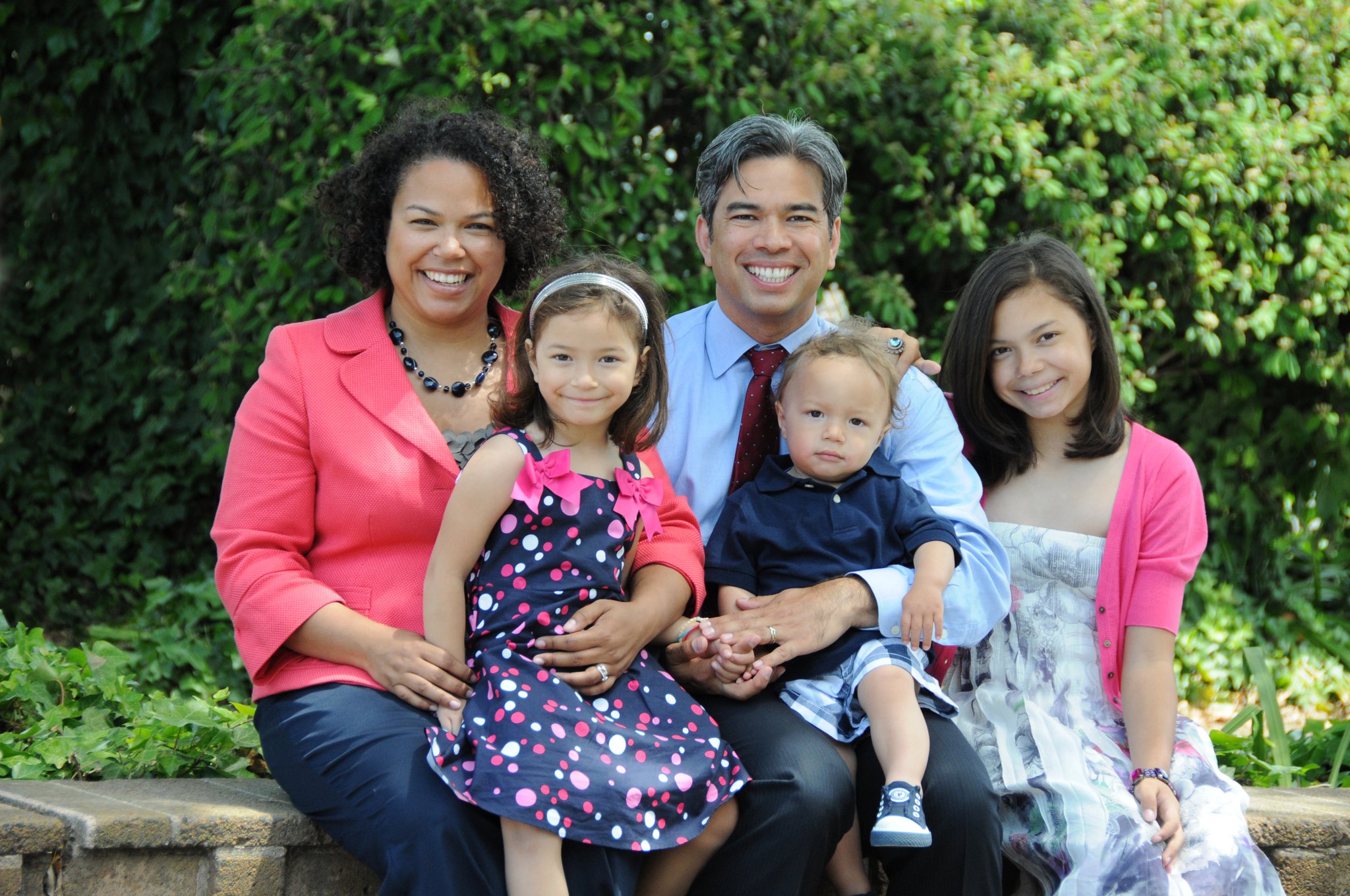
Rob Bonta, his wife Mialisa and three children.


I will confess that one of the things I like most about Rob is his family.  It really represents the face of America.  Rob himself is of mixed Filipino and white heritage and he’s married to a Puerto Rican woman of mixed African, indigenous and Spanish blood.  They have three children who attend public schools in Alameda.  Though they are both Yale-educated lawyers, they have not pursued highly paid careers.  Rob is a Deputy City Attorney in San Francisco, while his wife Mialisa is a consultant with a non-profit education organization.  That means that they and their children face the same financial problems than most of us Californians do.  Issues of public school funding, paying for college, health care and so forth touch them personally.   I think that’s an important consideration in choosing representatives.

But having a nice family is just icing on the cake; what I most like about Rob is his brain.  Last year, Mike and I met with Rob for a couple of hours to ask him about his race and pose  all sorts of questions.  I was blown away both by his analytical skills and his honesty.  Seldom he gave me the answer I was looking for, even when I telegraphed quite clearly what I wanted to hear.  Instead he answered my questions carefully by identifying all the issues at play (even those that were not so obvious), and considering the implications of each course of action.  Some of the issues we brought up were new to him so he wasn’t prepared to give us a concrete answer but hearing his thought process makes me confident that he will not rush into any policy decision and that he will be able to foresee the not-so-evident consequences of any position he takes.

Almost as importantly, I am confident that any legislation that Rob drafts (and hopefully votes for) will be well written.  One of the great problems with our justice system is that so many of our laws are very poor: unclear, contradictory, too complex to handle.  I think the state could save millions of dollars by just passing well drafted laws that do not need to be constantly litigated.

Politically, I see Rob as a middle-of-the-road Bay Area progressive.  I think he will pursue progressive causes – in particular vis a vis education and social justice -, but my feeling is that he will be pragmatic and perhaps more willing to compromise than Guillen.  I also don’t see him as being much of a “leader” – I think we can rely on him for sound legislation but I would not expect many a fiery speech.

One thing that concerns me about Bonta is his political future.  I think he has the “goods” to make it far in the political world.  I see him moving into the governor’s mansion (or is it an apartment now?) or even the White House one day.  He has the ambition to do it.  But there are both pluses and minuses about having long term political expectations.  On the one hand, the promise of a political future may work to keep Bonta more accountable to his constituency and more “clean”.   On the other, campaigns are expensive and money is not free.   Any candidate who is thinking long term, needs to think about who will fund his future political campaigns – and when it comes time to vote, it’s hard to do the right thing when it means having an empty campaign bank account next time around.  To his credit, Bonta is very cognizant of this fact.  When I discussed the issue with him, he didn’t insult my intelligence by feeding me the “they’ll support me because they support my positions” line which so many candidates use.  Instead, he seemed very aware and troubled by what these future fundraising needs would mean for him.  I appreciate that immensely, I think that the most important skill a politician can have is self-awareness.

I have co-endorsed Rob Bonta and Abel Guillen, I think both of them bring different things to the table and I wish we could send them both to Sacramento.  Rob is the favorite right now, but we still have a few weeks before June.

Apr 252012
 

Bonta, Guillen and Young vie for 18th Assembly District Seat

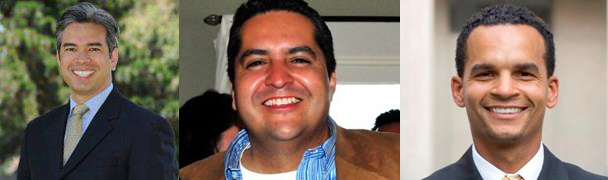
Candidates for CA AD 18

Rob Bonta, Abel Guillen and Joel Young


Who are they and who you should vote for.

*Updated on May 7, 2012*


Any day now, Californian absentee voters will be receiving their mail-in ballots for the June 2012 primary elections.   For years, San Leandro was part of Assembly, Senate and Congressional districts which included our neighbors to the south and east.  Redistricting has changed all that and we now join Alameda and Oakland in a district in which San Leandro has comparably little influence.  It’s thus not surprising that there are no San Leandrans running for state or national office this time around.  As of this year, Barbara Lee will represent us in Congress and Loni Hancock in the California Senate (both need to be re-elected but neither has serious competition).  The 18th District Assembly seat, however, will become vacant because of term limits.  Three candidates – two from Oakland and one from Alameda – are vying for it.

During the last several months I have met and talked extensively with each of the candidates.  I have also heard them at different fora.  Based on what I learned, I have endorsed both Rob Bonta and Abel Guillen.  I’m not usually a fan of dual endorsements, but both these candidates have a lot to offer, in different ways: both are smart and dedicated, but while I see Rob being more methodical and better able to write good legislation, I like Abel’s passion and I think he is more likely to stay true to his progressive ideals.  The third candidate, Joel Young, in my opinion lacks gravitas and seems to have impulse control issues that would not make him a good legislator.

I have written my impressions of each candidate individually.

Rob Bonta is a Yale educated lawyer and a family man.  He is very smart, a quick thinker and able to see the potential consequences of particular legislative decisions.  I think he will be an excellent legislator – I also think he’s smart enough to recognize the perils of the political process and hopefully ethical enough to navigate around them.  If elected, I see Bonta having the potential to go all the way to the Governor’s mansion (or is it an apartment now?)  and even the White House.  Bonta seems to be the front runner so far.

Abel Guillen is the son of Mexican immigrants, a dishwasher and a cook and grew up in the Mission.  He is the American success story, through commitment and hard work he got into Berkeley with the goal of  “doing good, but also doing well”.  As the VP of a school finance firm, he will be able to navigate the State budget better than most and he has creative ideas about how to improve the economy – including the creation of a state bank – that merit consideration.  Guillen’s biggest strength, however, is his commitment to the community and his passion for achieving positive change.  He has a broad base of support, including nurses and teachers.

Joel Young is an African American attorney and also a Berkeley graduate.  He is running on a platform of  “jobs, jobs, jobs” but has little to say as to how to create them.  Some personal scandals and his reaction towards them don’t speak well of his character.  He is supported, however, by a significant segment of labor and the African American community.


Mar 152012
 

Short Answer: No

There are many things that voters should look into when choosing which candidate to vote for, but endorsements from politicians, parties, organizations and even prominent individuals is not one of them.  The unfortunate fact is that most politicos and organizations do not endorse based on the quality of the candidate, but based on factors such as personal ties, political advantage, likelihood of winning and willingness to do their bidding.

For Voters: How Candidates get Endorsements

Incumbency/Likelihood of Winning

Endorsements usually go to the candidate deemed most likely to win, which is usually thought to be either the incumbent or the candidate that has raised the most money.   This is true for both individual and institutional endorsers.  Most endorsers want something in return for their endorsement (even if simply access or future support), and they’re more likely to get it if their endorsee wins.  In addition, some candidates have a reputation for vindictiveness, and politicos or organizations may not want to irate them by endorsing their rivals.

A couple of examples.  During the 2010 Mayoral election, the Police Union initially endorsed City Council member Joyce Starosciak.  Not only was she a staunch police supporter (her husband is a sheriff deputy), but the conventional wisdom back then was that a woman candidate, going against two males, would win.  As the campaign developed and it became clear that Starosciak wasn’t doing well, the Police Union hurried to co-endorse the incumbent Mayor Tony Santos (who had a reputation for vindictiveness).  During the 2008 campaign, the San Leandro Teachers Union (SLTA) endorsed Carmen Sullivan for School Board, but only after it was clear that she was the only candidate running.  Sullivan was at the time a supporter of Superintendent, which the SLTA wanted to oust.

Personal and Political Ties

It makes sense, if a candidate is your friend you are likely to endorse him.  Some ties are very old and very strong.  For example, Congressman Pete Stark had a standing policy of not endorsing candidates in non-partisan races when more than one Democrat was running.  However, he broke his rule and endorsed Julian Polvorosa, a long time friend,  for City Council during the 2006 race.  Charlie Gilcrest, a local campaign manager who has been active in the Democratic party for close to forty years, obtained the endorsement of practically every politician in the East Bay when he ran for City Council in 2008, even though he’d never held elective office.

There is also an unwritten rule that if someone works in your campaign, you endorse them when they run for office.  For example, Governor and former Oakland Mayor Jerry Brown recently endorsed Libby Schaaf for Mayor; she used to work for him.

Not everyone follows this rule. Ellen Corbett, in particular, is much criticized for putting political considerations above loyalty to her former supporters. That strategy came back to hurt her, however, when she ran against Eric Swalwell for Congress.  Most of those former supporters turned on her.  They knew she wouldn’t have their back.   Smart candidates, however, pay their political debts.

Political Alliances

Often times endorsements are the result of political alliances.  An endorser who doesn’t care much about the outcome of a given race, might endorse a candidate at the request of a political ally or, in case of politicians, big campaign contributors that do have a steak in that race.

Affinity Politics

African American politicos almost always back other African Americans.  This is less true for Latino and Asian politicos.  It makes sense.  As minorities, you want to build the influence of your community in the political arena.  The problem is that the candidates they back are not always going to be the best.

Similar Agenda

Organizations, in particular, are likely to endorse candidates who have similar agendas (or views) to their own.  This can be a good or bad thing, as far as voters are concerned, depending on whether they know what the actual agenda of the organization in question is.  For example, the SLTA backed Hermy Almonte and Morgan Mack-Rose in the 2008 School Board election, because they also wanted to get rid of the Superintendent.

Some membership nonprofit organizations, however, have been “infiltrated” by members who are more interesting in political power than furthering the cause. Endorsements from the Sierra Club, for example, are often suspect.

Tit-for-Tat

Business associations, in particular, are likely to endorse candidates based on what they think the candidates can do for them.  The Rental Housing Association and the Association of Realtors, for example, will endorse candidates that will vote against rent control measures. The Chamber of Commerce will likely endorse candidates that won’t vote to raise the minimum wage.  The Police and Fireman unions will endorse candidates that are willing to give their departments the most money, raise their salaries and pensions, and do not insist in holding their departments accountable.

Pettiness

Often times, endorsements are actually based on pettiness.  In 2010 the SLTA endorsed Corina Lopez for San Leandro City Council – even though they had never before endorsed in City Council races – because she was running against Pauline Cutter, whom they opposed because she had supported the Superintendent they didn’t like.  In 2012, the SLTA president endorsed Ursula Reed because she was running against Morgan Mack-Rose whom, as School Board president, had angered the SLTA leadership.  In the current election, Diana Prola endorsed Leo Sheridan, and worked hard to get him the endorsement of the Democratic party and of labor, because he’s running against Latrina Dumas.  Dumas was a parent supporter of that controversial Superintendent and often spoke out in her favor at School Board meetings.

Democratic Party

The candidates endorsed by the Alameda County Democratic Central Committee are often those that have powerful interests behind them.  Candidates often hire Alliance Campaign Strategies, a campaign management firm run by a member of the ACDCC’s executive committee, as a way of assuring themselves the Democratic endorsement or at least blocking that of their opponents. There is a lot of behind the scene deal making and threats.  Occasionally, the endorsements do go to the candidates that best exemplify Democratic values, but often that’s not the case.

The Democratic endorsement is considered very valuable, however.

Newspapers

A newspaper’s endorsement will be based on the political views of their current editorial board. In the case of the Bay Area Newsgroup papers (Oakland Tribune, Daily Review, etc.) their endorsement is based solely on how much a candidate knows about the financial situation of the city/district they are running for, how much they understand the nature of their unfunded liabilities and how they plan to address this issue.

Whose endorsement should you actually pay attention to?

My own, of course.  I’m sort of joking, but I do actually stand by the candidates I endorse, whom I’ve chosen based on their liberal ideology, knowledge base and ability to do the job.

The endorsements you really should pay attention to are those of people you know and respect, who know the candidates and, preferably, the requirements of the office for which they are running.  For example, I decided to vote for Latrina Dumas for San Leandro School Board in part due to the fact that a friend of mine, who has been involved in the schools for many years and understands what the School Board does, fully recommended her.  Sure, I did my research, but her first-hand opinion mattered greatly.

Beyond that, pay attention to endorsements that actually explain why a candidate is chosen over another.  The Green Party, for example, provides explanations of their endorsements, though unfortunately they don’t include San Leandro.  The East Bay Express and other newspapers do as well.

For Candidates: Which endorsements should you seek?

You should seek endorsements from organizations or people:

1- who will give your campaign financial contributions

2- who will get others to contribute to your campaigns or throw fundraisers for you

3- who will put elbow grease into your campaign

4 – who have a “base”.

One of the reasons why labor is so powerful in the Democratic party is that they can do all of those things for you.  While you can definitely win against a candidate endorsed by labor (Mayor Cassidy did in 2010 and Benny Lee in 2012), it’s definitely easier if they are behind you.

An endorsement from the Democratic Party, on the other hand, is much less powerful because it’s “passive,” i.e. it doesn’t come with anything attached.

In addition to the unions, there are several PACs that will give you campaign contributions, often considerable ones.  They usually won’t do anything more than that for you, but money is essential for running campaigns.  Of course, most of those PACs will want something from you in return.

Having big politicians endorse you is usually, in itself, not that useful – it may help your ego, but voters are seldom  impressed -, unless those politicians also contribute to your campaign directly or indirectly.  Mayor Cassidy, for example, gave Pauline Cutter’s Mayoral campaign $2,000 and has helped her campaign behind the scenes.   Other politicos, on the other hand, usually do little more than sign their names and, if you are lucky, record a robocall for you.  If you are running, it’d behoove you to find out which endorsements are worth pursuing.

The value of big-name endorsements, however, is in convincing other endorsers that you’re the most credible candidate, and thus generate the support of more endorsers, in particular those who will give you money because they believe you’ll win.

For local campaigns, volunteers are just as important as money, if not more so – so pursuing the endorsement of people and groups that are willing to put time and effort into your campaign is time well spent.  For example, the San Leandro Community Network, a now defunct local political and civics organization, did not make financial contributions to political candidates, but its members provided lots of very valuable volunteer work, from graphic design to data management and computer services, to phone banking, walking and flyering.  The candidates they supported saved thousands of dollars (tens of thousands, in the case of Cassidy) by having SLCAN members work on their behalf.  Similarly, in San Leandro you want to get Jim Prola’s endorsement (though he’ll rarely endorse someone until Labor endorses them first), because he LOVES walking door to door and he’s great at convincing people to vote for you and put up a lawn sign.

Finally, you want the endorsement of people who have influence among the voting population you are targeting.  Some times those people are politicians, but most often they are not. In general, the higher up the ladder the politician is, the less influence s/he has with the voters – at least for what I can see.  Stark’s endorsement did little to help Polvorosa, Corbett couldn’t help Santos and Hayashi didn’t help Starosciak.  That’s because people who are in Washington or Sacramento most of the time, are unlikely to be able to keep their bases energized and loyal.  But you can’t even count on local politicians to have bases – they need to be built, and that requires a lot of time and effort.  Currently, in San Leandro, I’d say there are only a couple of politicians that actually have influence over a large number of voters.

Non-politicians can actually be more influential.  Go after people who are thought to be “on the know” and reasonable by many members of the community.  Long-time teachers, coaches and principals are great endorsers, as hundreds if not thousands of voters may have personal experiences with them (just make sure the teachers were well thought of).  Endorsements by community leaders are great as well.  Religious ministers can endorse you in their personal capacity – so it’s not a bad idea to seek the endorsement of those who have particularly large congregations.

Some endorsements from well known people are more problematic.  My endorsement, for example, may lose you as many votes as it gains you.  The same can be true of PTA and Homeowner Association presidents – often times there are as many people who dislike them as who like them.

How to get the endorsements you want

Organizations, such as the Alameda Labor Council and the Democratic Party, usually have procedures for getting their endorsement and you should look them up on their website.  As for the rest, you need to call – and ask to meet with them.  And then you sell yourself to them.  To do so, you need to be prepared.  You need to know why you are running, how your values match theirs, what your position is or would be in a number of different issues, and how you differ from your opponents.  Cold calling is fine, but it’s best if you can have someone with influence with them call for you first, or at least let you use their name when you call (i.e. “I’m running for X, so-and-so suggested I meet with you).

Now, as I mentioned above, some endorsements are very political and a simple meeting won’t do it.  For those, try to find someone in the know to give you some hints on how to approach them.

If you have any questions or comments, feel free to contact me.

SLT’s Guide to Local Elections

This article was updated for the Nov. 2014 election.

Mar 052012
 

Just a quick note to let you know that I am now an official candidate for the Alameda County Democratic Central Committee.  I’ve served one term there and I’d like to serve another.  If you are a dem, I’d love you to vote for me in June.

I see my role in the Committee as being the voice for civil liberties and accountability.  While Democrats are quite committed to labor issues, education and social justice, there seems to be a reluctance to push for civil liberties head on.  Part of the problem, I think, is that the people who run for the Committee usually come from unions or grassroot organizing.  A larger part, however, is the current political situation.

Our Democratic President may very well have the worst record on human rights of any administration in the history of this country.  As a human rights activist, I find this outrageous.   Obama has ordered the assassination of American citizens  and their indefinite detention and torture.  He has kept Guantanamo open, widened spying on American citizens and tried to silence whistle blowers.  Unfortunately, the list of his repressive policies could go on and on.

And yet, the Republican party is pushing so hard to destroy the social covenant, our right to privacy and freedom of religion and our economic welfare, that the possibility of one of their presidential candidates winning the election is terrifying.  For that reason, the Democratic establishment is very wary of criticizing Obama’s actions or questioning his agenda (at least in non-economic or labor issues).

As a member of a local Committee my reach is, of course, very limited – but I think my voice is still necessary, specially now.

I understand that these positions will lose me as many votes as they may win them (one of my neighbors refused to sign my nomination papers because of  of my criticism of Obama) – but I do believe in democracy, and that means being as open and honest with the electorate as possible so that you can make an educated choice of who will represent you best.  I hope I will.

I’m running for the 18th Assembly district, which includes San Leandro, the city of Alameda and most of Oakland (except for the hills).  You get to vote for six candidates, so far there are ten candidates on the ballot though more may file before the March 9th deadline.

My husband, Mike Katz-Lacabe, who is more moderate than I is also running and I will ask you to vote for him.  Ditto for Robin Torello, who chairs the party in Alameda County.  She is truly indispensable for the smooth running of the Committee and we’d be lost without her.

Aug 272011
 

Tony Santos is at it again.  Since being defeated by Stephen Cassidy in the November 2010 San Leandro mayoral election, Santos has made no secret of his bitterness and resentment.  He has blamed anyone and everyone (excluding himself) for his defeat and has committed his forced retirement to the cause of defeating “ranked choice voting” throughout the country.  He’s written letters, had himself interviewed, and in his latest stunt, he testified in Sacramento against making it easier for California cities to institute ranked choice voting.  He is sure, he will tell you, that ranked choice voting was the ultimate culprit for his loss.  And he may be right.

It is difficult, even for insiders, to get a good grasp of the 2010 mayoral campaign in San Leandro.  Santos  had been in and out of City Hall for decades.  He was running for re-election as Mayor with the support of Labor, fire fighters, and, at the 11th hour, the police.  He was confident, even cocky, that he would easily win.  After all, no elected-mayor had ever lost  re-election in San Leandro (one appointed mayor, who’d promised not to run prior to his appointment, did lose).  Incumbents have many advantages in city races: they enjoy name recognition, can easily gather up endorsements and have a much easier time raising money – nobody wants to say no to a sitting Mayor or City Council member.  In addition, voters who don’t pay particular attention to city politics and are not extremely dissatisfied with city services, tend to vote for incumbents.  For this reason, sitting San Leandro mayors seldom face serious competition; it was almost incomprehensible to Santos that he would face not just one, but two credible opponents.

Council woman Joyce Starosciak seemed like an unlikely Mayoral contender.  In 2010, she was half-way through her second term in office, and could list few accomplishments and fewer long-term plans for San Leandro.  If her intentions were to actually run the city, it’d have made the most sense for her to wait until 2014 to run, when Santos would be termed out.  Starosciak, however, was in a hurry. As Assemblywoman Mary Hayashi’s heiress apparent, Starosciak was posed to run for Assembly in 2012. She’d be better positioned to win if she did so as Mayor of San Leandro, than as a mere City Council member.  She had good reason to believe she could win: a top campaign manager, lots of money (including some from a Hayashi-associated PAC), and support from the police (her husband is a sheriff deputy with Alameda County).   Most importantly, Starosciak was a woman.  After Ellen Corbett was elected to the California Senate in 2006, defeating better funded male opponents, the conventional wisdom within political circles was that women had a natural advantage in democratic districts (and San Leandro is heavily democratic). Starosciak’s main message during her campaign was indeed “I’m a woman and a native of San Leandro.”  It was a message that Santos feared.

Stephen Cassidy’s reasons for running in 2010 were murkier.  He had been elected to the San Leandro School Board in 2004, after defeating a well-connected incumbent, but after four tumultuous years in the Board he’d chosen not to seek re-election (he had, however, engineered the election of two friendly candidates in his stead).  He had long been rumored to have further political ambitions so it wasn’t a complete surprise when he decided to run for Mayor.  He did so basically with a message of competency: “elect me and get someone who can actually read a budget and think long term.”  Cassidy’s political strategy was to appeal to distinct voter groups with slightly different messages: to conservatives and the elderly, with a message of fiscal responsibility; to parents, with promises of better relations between the cities and the schools; to Spanish and Chinese speaking voters, with fliers in their own languages.  Cassidy’s underdog status meant that he was unable to get big donations from corporations and PACs, but he made up for it by building an impressive grass-root apparatus and tapping into the professional experience of his supporters.  Cassidy recruited a former evangelist for Apple Computer, an expert on messaging, as his campaign manager.  A local graphic designer put tens of hours of work into his campaign literature and his website  while a top computer programmer provided back end and mailing list support. Another techie was in charge of his voter data analysis.  The other candidates had to pay tens of thousands of dollars for similar services.  Meanwhile, an army of volunteers organized fundraisers and house coffees, walked, telephoned, wrote letters and passed on fliers for his campaign (full disclosure, I helped Cassidy with his campaign in the initial months).  Cassidy himself spent over a year walking the streets of San Leandro and introducing himself to voters.  His was a grass-root campaign at its best.

The November 2010 San Leandro city election was the first time in which ranked choice voting (RCV) , also known as “instant runoff voting,” would be used in San Leandro.  The city had amended its charter to permit ranked choice voting early in 2000, but had only implemented it a few months before.  The appeal of RCV to city staff was that it allowed for both general elections and runoffs to be conducted at one time, saving staff time and the city money.  Progressive members of the City Council liked that RCV allowed elections to be held in November (rather than June), which meant they’d have greater voter participation.  However, RCV was not popular with all City Council members.  Starosciak, in particular, wanted to change San Leandro’s elections back to a plurality system, where the candidate that got the most votes would win, even if s/he did not reach 50% of the votes.  Given the assumption that female candidates had a natural advantage with the electorate, Starosciak figured a plurality system would virtually guarantee her winning.  Her plan never got much traction with the other members of the Council, however.

As discussions for implementing ranked choice voting got more serious in early 2010, then-Mayor Tony Santos became its biggest advocate.  He was seduced by the rhetoric of Fair Vote, an organization that lobbies for RCV, and convinced by his friends in Labor to push the City into implementing RCV for the 2010 elections.  He went as far as suspending a tied vote on RCV, so that a City Council member that had been absent for the vote could break the tie and have the ordinance pass.  Santos later said that supported RCV because he had been told RCV mostly benefited incumbents.

As the 2010 Mayoral race developed, none of the campaigns had a firm grasp on who the top contenders were and how RCV would play into the equation.  The Santos campaign conducted an informal telephone poll at the end of the summer which showed Santos in the lead, with Starosciak a distant second.  Though the poll was methodologically flawed, Santos took it as a sign that he would easily win and that Cassidy wasn’t a threat of any kind.  While he delighted in attacking Cassidy through a friendly blogger, he didn’t feel compelled to put much effort into his campaign.  He rarely walked, never fliered, and his first mailer did not even arrive until several days after absentee voters had received their mail-in ballots (ideally, you want to have your mailer arrive at the same time as the ballots, so your name is fresh in the mind of those voters who like to vote right away).  It wasn’t until mid-October that Santos’ campaign realized that Cassidy posed a considerable threat: more and more people  they encountered were openly supporting Cassidy, the city was blanketed with his lawn signs, and letters to the papers were overwhelmingly in Cassidy’s favor.  Santos’ campaign quickly issued a mailer answering Cassidy’s charges against him and put forth robo-calls from, among others, Senator Ellen Corbett, urging voters to vote for him.  This helped him enormously with poll-day voters, but it was too late to impact those who had already mailed their ballots.

Starosciak’s campaign was in trouble from the moment Cassidy entered the race.  As most challengers, Starosciak needed to run on a message of  “change,” but as a sitting member of the City Council there was just so far she could carry this message without convincing voters that they should vote for Cassidy, the outsider, instead.  Cassidy’s criticism of City Council’s actions – like spending all the city’s reserves – while primarily aimed at Santos, also applied to her.  She couldn’t answer the charges, however, without helping Santos’ own campaign.  Her strategy, then, seemed to be to keep out of the fray and run on her gender, personal charm and San Leandro native status.   While she ran a more energetic campaign than Santos, and hired people to walk and make phone calls for her campaign, she never really acquired much momentum.  By the fall, even the police had abandoned her and co-endorsed Santos.

Cassidy, meanwhile, kept pushing his message of “competence” and “fiscal accountability,” accusing City Hall of mismanagement at every possible turn.  His big issue was “pension reform” for City employees.  This made him terribly unpopular with the employee unions and Labor but hit a nerve with local voters as even the Democratic candidates for Governor and State Treasurer started to talk about the need for pension reform at the state level.

Of the three campaigns, the only one that seemed to take RCV into account was Cassidy’s.  As he and his supporters walked and called voters, they specifically asked those who expressed support for one of the other candidates, to mark Cassidy as their second choice.  Neither of the other two campaigns seem to have done this.  Indeed, Santos’ campaign showed contempt for the whole RCV process by telling supporters to not mark second or third choices.

One of the biggest criticisms of ranked choice voting is that final election results were not available until weeks after election night.  This proved to be the case in San Leandro.  Election night results had Santos winning the first round by 62 votes (out of over 20,000 cast); two weeks later, when all second and third place votes had been counted, Cassidy was ahead by 232 votes and was declared the winner.  Santos could not accept the results, and to this day he has not conceded defeat.

At first glance, it would appear that Santos is right when he blames RCV for his defeat.  He did have 62 more 1st-place votes than Cassidy and in a plurality system like the one Starosciak advocated, Santos would have won.  However, San Leandro specifically got rid of plurality elections in 2000, after Ellen Corbett and Shelia Young became mayor with less than 50% of the total vote.  San Leandrans did not want a mayor which the majority of the people had not elected.

Had RCV not been implemented in San Leandro, the Mayoral elections would have taken place in June 2010, with the two top candidates facing a runoff in November. Given the lack of independent, accurate polling data (polls are too expensive to conduct for most local elections), it’s impossible to say what would have happened if that had been the case.  Starosciak only received about 20% of the first-choice vote in November, so it’s reasonable to believe she wouldn’t have been one of the two top vote-getters in June, but a longer campaign cycle together with the increased media attention to Cassidy’s pet issue, pension reform, probably benefited Cassidy considerably.  It definitely allowed him more time for both campaigning and fundraising.

But had Cassidy and Santos been the top vote-getters in June, it is by no means clear who would have won in November.  Santos would have surely benefitted both by knowing who his real opponent was and how popular he was.  If the election had been as close in June as the first round was in November, Santos would surely have seen the need to step up his campaign.  Given how well he did with poll-day voters once he took campaigning seriously, that may very well have given him a victory.

On the other hand, a June-November election cycle might also have benefited Cassidy. Cassidy’s main problem, as is the case with all underdog challengers, was raising enough funds to put forth a credible campaign. A good June placement would have demonstrated to political contributors that Cassidy was a very viable candidate and would have likely opened their wallets.  Such placement would also have re-energized Cassidy’s volunteers and brought additional supporters into the campaign.

An additional factor that cannot be accurately assessed is who Starosciak would have endorsed.  After her November defeat she was quite bitter with both Santos (who made a series of serious personal attacks against her during the campaign) and Cassidy (whom she sees as having stolen the election from her), so it’s hard to envision her supporting either.

In any case, we will never know. We also don’t know how the November 2010 San Leandro RCV election will affect future elections in San Leandro or elsewhere.  Future candidates will hopefully learn of the importance of seeking 2nd and 3rd choice votes.  Note that this does not mean that candidates will necessarily run “kinder,” less negative campaigns.  Candidates in races with clear front runners need to attack their records in order to take votes from them.  If anything, what an RCV election may do is focus political attacks on the front runner(s), but that is just as true in regular elections.

When all is said and done, Santos has nobody to blame for his defeat but himself: he antagonized voters by treating them callously during public fora and by taking unpopular positions (e.g. not supporting San Leandro Hospital, dismissing fears about crime and supporting a large affordable housing project), he put little effort into running his campaign and he did not take RCV into consideration in his campaign strategy.  Other incumbents can learn from his mistakes.