Sandra Spagnoli

Sandra Spagnoli is the Chief of the San Leandro Police Department. She was hired and started working in January 2011, after the City of San Leandro settled a lawsuit brought by female police officers for sexual harassment and discrimination.

Spagnoli at first gave indications that she would use “best practices” in the running of the police department. She reorganized the department and created new policies. She also appeared to reach out to the community with frequent “Coffee with the cops”.

It soon became evident, however, that Spagnoli’s attitude towards crime in San Leandro was one of “everybody is a suspect and everybody should be treated as one”. The SLPD has become less and less transparent under her rule. She has interfered in the city’s politics, both by trying to organize lobbying of the City Council during work hours and using public resources, and by seemingly interfering with city elections (during the 2012 campaign she failed to investigate a leak of a warrant against a candidate, and chose to run a press release about a suspect with the same last name than that same candidate during election day). Spagnoli has also gotten in trouble for issuing press releases falsely accusing people of crimes they did not commit. The City of San Leandro recently settled a lawsuit based on a “sting” she authorized to try to catch homosexual men soliciting sex in public. In June 2012 the SLPD issued a press release accusing a respect High School teacher of possessing child pornography, which seems to be a complete fabrication.

Spagnoli has also earned the dislike of community members for trying to restrict bee-keeping citing the made-up danger of “over pollination”, providing false information to the City Council about the “dangers” of marijuana dispensaries and trying to place surveillance cameras throughout town without alerting the community.

She makes it a habit to provide the Council and the Community with false information. For example, she has repeatedly claimed that San Leandro’s rising clime is due to the early release of inmates due to re-alignment, when no such releases have happened. She told the City Council that the City only had one working license plate camera, with 2 about to be installed – when in reality it had 3 installed and 2 more on the works. She claimed that he department receives an average of one complain about chickens a week – when records show only one complain has been recorded in two years. We could go on.

Jun 102013
 
A scene from the movie "Flowers in the Attic." The SLPD considers the book to be "child pornography".

A scene from the movie “Flowers in the Attic.” The SLPD considers the book to be “child pornography”.

An Open Letter to Chief Sandra Spagnoli

Dear Chief Spagnoli:

You have requested that the public alert you about “similar incidents” to those concerning the charges for child pornography filed against SLHS teacher Rick Styner.

According to court documents, as reported by the media, these charges arise from “more than 200 pornographic stories” found on his computer,  including one about a 14-year-old girl having sex with her brother, reportedly accompanied by the naked picture of a girl that looked to be underage.

The story mentioned in court records sounds very much like “Flowers In The Attic
“, the best seller by V. C. Andrews.  The novel – which was made into a very bad movie
– concerns four siblings that are raised hidden in an attic and repeatedly abused.  As the children enter puberty, the older siblings start to develop sexual feelings for one another, and they consummate that relationship when the girl is 14 years old.
I have checked the San Leandro library catalog, and it would seem that the library does have multiple copies of this “pornographic story”.  It would thus seem prudent that the SLPD get warrants to search the homes and computers of all library personnel responsible for distributing such “child pornography”.

“Flowers in the Attic” has sold over 40 million copies worldwide, and it’s a favorite among teenage readers.  It would therefore seems likely that the book is also present in San Leandro school libraries and English classrooms. The SLPD should not take any chances and start investigations into all SLUSD librarians and English-language teachers.  Perhaps the SLPD should get a court order to have Amazon.com and other booksellers disclose the identity of everyone in the city that has bought a copy of this “pornographic” novel, so the investigation can become even more inclusive.   Who knows what other untold crimes people who read this story may be committing?

Of course, I understand that the problem is not only this “pornographic story” in Mr. Styner’s computer, but the fact that it was illustrated with a picture of someone who appeared to be underage.  While there may be a question about the age of the model in that photograph, there is no question that actress Thora Birch was only 16 when she appeared nude in the Oscar winning film American Beauty.  The main library, and undoubtedly hundreds of San Leandrans, have a copy of this movie and thus, according to SLPD standards, seem to be in possession of “child pornography.”

As you probably also know, when I wrote my article on the Styner investigation, I linked to pictures of Brooke Shields in Pretty Baby
– a movie in which she appeared nude when she was barely 12 years old.  Not only should the SLPD thus be able to arrest me, but everyone who read my story and clicked on the link.  I should be able to provide for the Chief the IP addresses of everyone in that situation.  Will arrest warrants follow?

Thank you, once again, for your commitment to keep San Leandro free of any real crime.  I support your crusade to clean the bookshelves of San Leandro’s citizens.  It’s definitely a much more important endeavor than paying attention to pesky little things like robberies, actual burglaries, domestic violence and, the peskier of them all, corruption and misconduct within your own department.

Sincerely,

Margarita Lacabe

This letter was e-mailed to Chief Sandra Spagnoli and copied to Mayor Stephen Cassidy, the other members of the City Council, City Manager Chris Zapata, Assistant City Manager Lianne Marshall and City Attorney Richard Pio Roda.

Jun 062013
 

mengelsuitIs High School Teacher SLPD’s latest victim?

Earlier this week, the San Leandro Police Department issued a press release announcing the filing of charges for “possession of child pornography” against Rick Styner, a teacher at San Leandro High School.  In one day, the reputation of a man that, by all accounts, had been honorable and respectful of his students, has been destroyed, possibly beyond repair.  I don’t think any of us can imagine the social opprobrium the Styner family is experiencing right now.  And yet, a careful reading of the facts as reported in the news stories do not show any actual criminal conduct by Styner.   Regardless of what happens to the charges, whether they are dismissed or whether Styner is tried and found innocent, his life and career has been ruined by Chief Sandra Spagnoli and the San Leandro Police Department.  And he is not the only one.

False Arrests at Marina Park

Last year, the SLPD issued another press release, featuring the pictures of two older men and accusing them of loitering around the bathrooms at Marina Park to solicit men for sex.   The community reacted immediately, calling these men every name in the book and instantly assuming they were guilty.  Even I, while arguing that their conduct was not a crime unless they actually intended for someone else to unwittingly witness a sex act, assumed that the basic facts of the press release were true: the men were hanging out around the bathroom hoping to pick up other men for sex.  I was wrong in making that assumption.  Simply put, the SLPD’s press release was a lie.

The lie was most egregious in the case of Michael Woody.  Woody had stopped at the parking lot near the Marina Park bathrooms with the intention of using the facilities for their intended purpose.  An undercover SLPD officer was loitering around and tried to engage Woody in conversation.  When the officer followed Woody into the bathroom, Woody became understandably uncomfortable and decided to leave.  The officer followed him to his car and arrested him as he was turning on the engine.   Woody had never indicated any interest in engaging with the police officer on any activities.  No charges were filed against him.

Steven Mengel, on the other hand, did show interest when a twenty-something plain-clothes officer Matthew Barajas approached him as he was sitting inside his car, parked in a public street, and propositioned him.  They made a date to meet the next day at noon near the bathrooms.  When Mengel arrived, Barajas showed up with a “friend”, now identified as Sargent Brian Anthony.  They agreed that Anthony would serve as a “look out”, making sure nobody came, while Mengel gave Barajas a hand job in the bathroom stall.  Before he had the opportunity to do so, he was arrested.

As I mentioned after the men’s arrest, California law only criminalizes sexual conduct in public, when it’s done under the reasonable belief that it could be witnessed by others who would be offended at the sight.  Clearly, that was not the case in this case as officer Anthony’s “job” was precisely to make sure that nobody would witness the act.  Disregarding the law, the SLPD officers not only arrested Mengel but they issued a press release falsely accusing him of loitering with the intent of engaging in illegal acts.  He was actually charged with this offense – which suggests to me that we should give little credence to any charges the Alameda County District Attorney levies against anyone -, but the charges were dismissed by the court.

Unfortunately, it will ultimately be San Leandro residents that have to pay for the SLPD’s misconduct – the city has been hit by a class-action lawsuit filed on behalf of Mengel, Woody, and all other men who have been subjected to similar actions by the SLPD.   While the lawsuit does not specify an amount for damages, similar lawsuits have resulted in settlements in the six and seven figures.  So much for Mayor Cassidy’s argument that the City should give Chief Spagnoli a raise because she would save the city money on lawsuits.

The Styner Case

(Update: the actual court documents in this case show that the charges are bogus).

What happened in the Marina Park should warn us against jumping to conclusions on the Styner case as well.  Indeed, a close examination of the facts on this case show that it’s not only weak but suspicious.

Rick Styner is a Computer Science teacher at San Leandro High School.   On April 16, he was teaching his class how to transfer files between devices, when he accidentally clicked on a file in his dropbox folder, opening a nude photograph of himself.  The police have not described this photograph, but according to what a student of Styner’s wrote on Facebook, it actually focused on the tattoos that Styner sports on his thigh – he gets one after he completes a marathon -, and only incidentally showed his genitalia.  *Update*.  After writing this part I looked through Styner’s facebook page and found a picture of the tattoo.  It’s actually on his right hip, and while this particular picture is cropped, it’s reasonable to believe that the original might have shown part of his genitalia and might have been the one the students were exposed to.  It’s clear that the purpose of this picture was to show off the tattoo.  Styner got it in August 2012; the little balls signify the marathon’s he’s completed, the number signifies the distance of the marathon (26.2 miles) and the phrase means “will run” in a Tolkien language.

Immediately after this incident, Styner notified the school authorities and surrendered his school-issued laptop computer.  An unidentified school district employee proceeded to look through the computer where s/he allegedly found material that s/he considered to be disturbing.   The district notified the police, without first notifying the School Board.

The material in question seems to mostly consist of written erotica and is fully protected by the first amendment.  According to news reports, one of these stories concerned incest between two teenage siblings (update, this story appears to be “Flowers in the Attic” by V.C. Andrews) , and it included a naked picture of a woman who looked like she might be underage.  The Police has not said whether they have identified the woman or confirmed that she is, indeed, underage.  The picture has not otherwise been described, so we don’t know if it is actually pornographic (not all naked pictures of minors are; “Pretty Baby” can still be shown in theaters in California even though it shows a naked, pre-pubescent Brooke Shields.  Did you click on that last links? You are now in danger of having the SLPD arrest you for possession of child pornography.).

The police have also not stated whether the story had actually been authored by Rick Styner, or whether he had downloaded it.  If the latter, the police must show that Steiner actually knew the story contained a pornographic picture of an underage girl.  After all, it’s extremely common for people to download large story collections, and not necessarily read or examine every single one.  It’s also very easy to unwittingly receive material – specially via a dropbox account – that one did not seek or is aware of.  And it’s not always easy to be able to tell the age of a model by her picture alone, much less determine whether the picture is actually pornographic.  Is this picture of Brooke Shields child pornography? You tell me – but if you look, beware that the picture will be downloaded to your computer and you’ll be potentially just as guilty of possessing child pornography as Rick Styner.   Which is likely, not at all.  “Possession of child pornography” is an intent crime, so unwittingly downloading pictures that you don’t know to be pornographic is not a crime.

My personal feeling is that if Styner was, indeed, interested in child pornography, there would have been hundreds of child porn pictures in his computer, not just one of someone who looks like she may be underage and who is not apparently engaged in actual sexual conduct.

The second charge against Rick Styner is even more bizarre.  He is accused of going into the home of a friend, who had given him the key, and taking pictures of her underwear and running clothing.   He is also accused of putting the picture of the woman’s head on pictures of naked bodies.   Apparently, he also took something from the woman’s home, which the police would not identify.

Now, I understand that the Police is trying to suggest that he took pictures of the clothing because of some weird sexual kink – but I find it interesting that the pictures also included the woman’s running gear.  Could it be that Styner – a marathoner – was actually more interested in the brand and style of the clothing?  I don’t know if he actually removed an item of clothing from his friend’s house – the police has shown that it’s not above lying in print and they might have made this up so that they can charge him with burglary -, but  could it not have been for a similarly innocuous reason, such as showing it to his wife to see if she’d like one like it?

As for the photographs – putting someone’s head on someone else’s body, however disturbing, is definitely not a crime, which begs the question of why the police would make such a big deal about it.

I have not personally met Rick Styner – though he is a facebook friend of this blog -, and I have no insight into who he is.  I do know, however, that when I googled him, what I first found about him (other than stories on these charges) were stories about how when SLHS teachers were protesting having to put anti-LGBT-bullying posters on their classrooms, Styner said he would put two.   Given the clear anti-LGBT bias that the SLPD has shown, and which still lingers at the school district, it makes me wonder if there could be a connection there.

In any case, so far it does not appear that Rick Styner has committed any crime, at least no more than what I did when I googled images of “Brook Shields Pretty Baby” and automatically downloaded several of her underage and naked into my computer.  Then again, I would not be surprised if the SLPD was knocking at my home next.

 

Dec 132012
 

But is this a ploy for police to gain access to resident’s backyards?

San Leandro Police Chief Sandra Spagnoli is attempting to turn the “urban farming” ordinance the City Council voted to pass in October 2011, into an “animal control” ordinance.   After that meeting, City staff drafted an ordinance, modeled after those in surrounding cities and based on community input, that achieved a happy balance between promoting and regulating urban farming.   The Police Chief, however, got a hold of it and is pushing to have it rewritten to provide strict controls on the keeping of bees and chickens.

According to the Chief, bees need to be strictly regulated because of concerns over “over pollination and health hazards”.  At the Dec. 11th Rules Committee meeting, where these matters were discussed, these concerns were met with skepticism, to say the least.

Scott Terry, one of the main proponents of urban farming, is an expert beekeeper who gets called in when there is a swarm of bees in Alameda County.  He was puzzled about the Chief’s concerns:  “I have never ever before five minutes ago heard the phrase “over pollination,” he said at the meeting.

Mitch Huitema, a beekeeper who grew up on a farm concurred: “I have never in my life heard of, what was it, “over pollination,” she said

But San Leandro Councilmember Diana Souza, who has been against the urban farming ordinance from the beginning, was quick to reply “I really quick “google’d” over pollination in my phone and I got several responses so it is something that’s pretty common and just we might not hear about it in our day-to-day life but it was a quick Google and gave me plenty of responses.”

San Leandro Mayor Stephen Cassidy deadpanned: “We do have to be careful about the Internet. I think of the quote from Abraham Lincoln: ‘You can’t trust everything printed on the Internet.’”

Actually, if only Councilmember Souza and Mayor Cassidy had read those links Souza found while googling, they would have  realized just how ridiculous are fears over pollination.  The second link offered by google is a FAQ about pollination from Koppert Biological Systems, a company that provides pollination solutions to growers all over the world.  It clearly explains

“Over-pollination happens when bumblebees are starving for food in strawberry greenhouses. They then shake the anthers of the flowers so vigorously that it ends up damaging the fruit, which can lead to malformed fruit, sometimes with dark marks on them. Because of the bumblebees explorative nature, this behaviour is never a problem in outdoor pollination. In indoor pollination, it has only been observed in strawberries, and only when the bumblebee densities were too high. ”

The Chief’s “concerns” about “health hazards” are almost as disingenuous.  Honey bees are not aggressive and will not sting unless threatened.   Most bee stings actually come from wasps (yellow jackets are often confused for bees) and other “wild” bees.  Honey bees, moreover, will travel up to 5 miles in search of yummy nectar, so it makes no practical difference whether their hives are located in the property next door, or in a neighboring city.  What does make a difference is the type of flowers you keep: honey bees can’t see the color red.

Spagnoli must have realized how silly her purported concerns sounded, so she tried to booster her arguments by providing a “summary” of animal control regulations in other “Bay Area” cities.  None of the cities she listed were in Alameda County, not surprising as San Leandro is the only city in Alameda County which does not allow bee or chicken keeping.  Instead she cited a Yolo County regulation that makes it illegal to have “exotic animals not used in circuses or carnivals” and those of selected Marin County cities, some of which required beekeeping permits.

Honestly, I couldn’t quite understand why the Chief of Police has shown  so much personal interest on a matter that seems to have no law enforcement angle whatsoever.  But San Leandro resident Cynthia Chandler came to the rescue with an explanation.  Chandler, a Harvard and Cambridge trained lawyer and criminologist,  is an adjunct professor of criminal law and has worked extensively on prison issues:

” Training provided to police and corrections officials generally emphasizes using punitive solutions for addressing social concerns, and building policy to increase police discretion. Bee and chicken ordinances will give the SLPD discretion to search many more households and yards at will.”

Wow, even I didn’t see that one coming.  But given the other social control measures Chief Spagnoli has been espousing: from blanketing the city with surveillance cameras to banning specific businesses from town, I shouldn’t be surprised.

San Leandro residents don’t have to let this happen, however.   While some City Council members will bend to the Chief’s will every time, others can be more responsive to the community’s input.  You can write to all of them by clicking here.

Jan 312012
 

Speculations on a Shooting

On January 18th, at 3:50 AM, many in the northern part of San Leandro awoke to the sound of shots.  Perhaps because it was a particularly cold and windless night, the sounds traveled fast.  They were heard by Marina & San Leandro Boulevard, around City Hall, in Estudillo Estates as well as Assumption Parish, and even, albeit faintly, in the Broadmoor.

Thirty to forty people rushed to report the shots to the Police and 911.  Many others tried but weren’t able to get through.  The Police responded, albeit quietly.  They concentrated in searching the area between Castro and Thornton streets, between East 14th and San Leandro Boulevard.  They were looking for injuries and evidence.  They didn’t find anything.

What the Police did was standard procedure.  When the shots have been heard over such a big area, it’s impossible for the police to localize them by sound alone.  The area they chose to search through is the one from where they got the most 911 calls.  It makes sense, you’d think that people who heard them loudest would call first.

There was one miscalculation in that equation, however.  It was 3:50 in the morning.  People were at home.  All the businesses that line East 14th were closed.  If the shots had come from there, there would be no-one located on the street itself to report them.  And indeed, that’s where I think the shots were fired. Not at East 14th and Castro or Thornton, though, but East 14th between Estabrook and Harlan Streets – right by my house.

I was actually awake at 3-something AM when the first shots were fired.  I hadn’t been able to go back to sleep after taking my puppy outside probably an hour earlier.  I had heard shots from time to time before, but never this loud, never this close (well, except at the gun range).  And never before had I seen their muzzle flash.

The muzzle flash.  It was so bright, that I could see it while lying down in bed, by my north-facing bedroom window.  So bright, that my next door neighbors could see it through their closed north-facing windows.  I was so sure they were coming from so close that I didn’t look through the window, I stayed low, just in case a bullet came my way.  Apparently that’s a normal reaction to shots.

The next day, many people commented about hearing the shots on my Facebook page, the San Leandro Patch and neighborhood mailing lists.  But I came across only one person who had actually seen the muzzle flash.  Someone who lived near the corner of East 14th and Elsie, three blocks or so from my house.

With this information I contacted a ballistic expert – a professor of forensics at a major university, who has written extensively on the subject.  I found out that you can tell how far away a shot was fired by the interval between when you see the light from the muzzle flash and you hear the shot.  For every 100 feet, there is a delay of 1/10th of a second between the two.  Humans will notice this delay once it reaches 1/2 a second, or 500 feet from the source.  That means, that if you hear the sound and see the light concurrently, that is to say, don’t notice a delay, the shots were likely fired less than 500 feet from where you are.  We didn’t notice any delay.

So I knew two things, that the shots had been fired within 500 feet of the northern side of my house, and that their flash could also be seen from Elsie and East 14th.  I opened up Google Earth.  Their satellite photos of my neighborhood are surprisingly sharp.  They show not only houses, but also other buildings, cars and trees (though many of these are currently leafless).  These photos (and a ruler) made it easy to calculate where the shots were most likely to have been fired from.  Invoking Occam’s Razor,  I made the assumption that it’s most likely that the flashes that hit us had not been blocked by any buildings.  Even assuming that the shooter moved a bit between shots, that left a very limited area where the shooter could have been: the area around the parking lot behind the Pho An-Ha restaurant or across the street, at the sidewalk in front of the California Police Activities League.

Of course, I may be wrong.   I may be missing something important in this analysis, so I wrote to the Chief of Police.  I asked her to investigate and offered her the information I had gathered.  I figured the Police could at least talk to the people who saw the muzzle flashes and see where that led them.   She wasn’t interested.  When she finally issued a press release the next day, she asked the public for information on any property damages.  She specifically didn’t ask for information on the actual shooting or the shooter.

Now this, my ballistic expert tells me, is also standard procedure.  At this point they won’t be able to find the shooter, nobody is injured and there hasn’t been any property damage, so why should they care?  Well, perhaps because those shots in the night may be connected to something bigger.

The day after the night-time shooting, the Police reported that a an unmarked police car had been following a suspect when he did a u-turn with his car and opened fire on the policeman.  The suspect was arrested the following day.  He was identified as Matthew Nguyen.  According to the police, the shooting took place while the undercover police officer was investigating a narcotics operation.  Coincidentally (or not), a week and a half earlier the Police had announced they had busted a marijuana growth operation in a private house in San Leandro.  Five people, all with Vietnamese names, were arrested and the Police seized a number of guns, including two assault rifles, in addition to the marijuana and MDMA.

I had been originally skeptical about the wisdom of spending police resources to bust marijuana growing operations.  After all, the more pot we grow in California, the less we’ll be importing from Mexico, and the less money we’ll be putting into the hands of the ultra-violent Mexican drug cartels.  So I asked the police about this at the last Coffee with the Cops.  What they told me was quite interesting.  Apparently, while some home-based marijuana growth operations are run by people who might have lost their jobs and are trying to make ends meet, others are just part of the operations of organized criminal organizations which don’t limit themselves to just growing pot.  The problems associated with them are not just drug dealing issues, but also the danger to the neighbors from the activities in the house.  The houses are usually not wired well enough for the amount of electricity growing that many marijuana plants inside requires, electricity is often stolen from electric lines outside, and thus the risk of fire can be quite high.  The houses can often develop dangerous amounts of mold that can interfere with the health of those around them.  In other words, they are a public nuisance.

I didn’t think it was a coincidence that the growth house operation was ran by Vietnamese and that the man who had shot the cops was also Vietnamese.  And I also don’t think it’s a coincidence that the shots fired near my house could very likely have come from the parking lot of the Vietnamese restaurant around the corner.  I am not, of course, suggesting that the restaurant itself has anything to do with any drug operation, but immigrants to this country tend to patronize restaurants serving foods from their home lands, and I don’t think it’s unreasonable to believe that Pho An-Ha (which is said to serve very good pho) has drug dealers among its clientele.  Drug deals often take place in parking lots, and the parking lot of a restaurant known by both parties may be a good place to meet, specially at 3:30 in the morning, where no one is around.

I wanted to make sure I wasn’t falling on the easy trap of  “profiling”, or assuming that a criminal organization with Vietnamese members will mostly include other Vietnamese, so I decided to do some online research.  What I found is that Vietnamese and Chinese DTOs (drug trafficking organizations) are the main producers and distributors of house-grown high-potency marijuana in at least a hundred American cities (including Oakland), as well as of MDMA (ecstasy).   These DTOs are highly organized and “are very aggressive in surveillance and countersurveillance of law enforcement officers in the areas where they operate”*.  They started in Canada and exported their products to the US, but once the border was tightened in 911 they decided to move operations here.  They collaborate with local gangs to move their product and they may be involved in even more unsavory operations.  Vietnamese DTOs operating in England, for example, frequently import child-slaves to tend to the plants.

Of course, all the above is speculation.  I may be wrong.  But if I’m not,then what?  Well, I’m hoping that the Police will take notice that some pretty ugly drug dealing may be happening around this area and they’ll patrol enough so that the drug dealers will prefer to go elsewhere (hopefully to an unpopulated area), or at least, not bring their guns with them.


* Drug Trafficking Organizations, by the National Drug Intelligence Center

Jun 172011
 

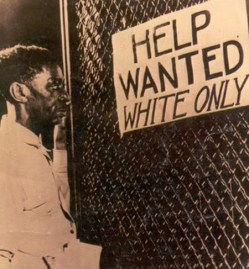
San Leandro is a diverse town.  The latest census numbers show that there about equal numbers of whites, Asians and Latinos in town, African-Americans making another 11% of the population.  You will see this wonderful diversity when you visit our schools, our public library, our parks or community festivities.  You will not see it, however, at City Hall.

Last Monday the City Council carried out a work session on the issue of racial diversity in the city’s workforce.  The city’s Human Resources consultant, Steve Harman,  and the Chief Police, Sandra Spagnoli, both gave very brief presentations about diversity in their departments.  The data they brought was scant but telling.  Sixty one percent of the total City workforce and 62% of the Police force is white.

These numbers, moreover, don’t tell us about the type of jobs held by members of racial minorities in San Leandro.  Are blacks and Latinos working for the city as accountants and public work specialists, or as street cleaners and gardeners? City Hall needs to make this clear.  We do know, however, that there are very few minorities at the upper echelon of city government and that 71% of the last 14 people hired at the city (which included the Chief of Police and the Finance Director) are white.

The situation at the Police Department may be even grimmer.  While Spagnoli did not disclose the number of minority sworn officers, Mike Sobek, the head of the San Leandro Police Officers Association,  spoke during public comments and mentioned that (out of the 90 or so sworn officers) only two are black and two Latino (including himself).  There doesn’t seem to be any Asians.  They did say that 13% of officers are female, while the number might look low it is better than the national average of 8% or so.

Fortunately both Chief Spagnoli and Sobek seem to understand the real importance of diversifying the force.  Spagnoli told the Council that Police forces must reflect the ethnic diversity of the communities they serve, and she’s making changes in the recruitment and promotion process at the SLPD to accomplish this goal.  Spagnoli also wants to get more officers that are bilingual, have college education, special training and live in San Leandro.   Applications for SLPD positions will now be accepted in an ongoing basis, allowing the SLPD to build a richer application pool.  It would help this process, however, if the SLPD posted job openings on their website.  Promotions to sergeant positions will no longer be based entirely on an interview with police higher ups, but on objective criteria as well, and require people from outside the SLPD in the interview panel.  This latter change comes as part of the settlement agreement with the female officers who sued the city for sexual discrimination.

During public comments, Sobek spoke of the need to not just open the process to minority applicants but to specifically recruit them.  He suggested the Police go to colleges with diverse student populations and suggest law enforcement careers to students who might not have considered them before.  Having a Police force which is diverse not only ethnically, but ideologically would likely help in establishing good relations with the community as a whole.

Sobek had many very positive things to say about Spagnoli – in particular he spoke eloquently about how she’s helping the force gain a sense of focus and purpose.  It seems she’s really bringing a level of professionalism the force was lacking.  From the outside, it’s difficult to know how she’s handling the “rotten apple” problems within the SLPD, and as head of the Police Union Sobek is not an unbiased observer, but his words of praise for Spagnoli seemed heartfelt and I’m hoping they reflect a commitment within the SLPD hierarchy and union to create a police force with is both clean and committed to the community they serve.

Back at City Hall, the idea of diversifying the workforce seems to be new and novel at the City management level.  While recruitment of individual positions varies, it seems clear that the city has not done anything to promote job openings among minority populations.  The city does not even advertise its jobs in places like Craigslist, preferring to use the San Leandro Times and its own website.   The City Council, however, seems to be listening to the tolling of the bells and sent the message that they want a more open process.   The Council’s real commitment to diversity will actually be tested in their choice of a new city manager.  Signs so far are encouraging, last month they started the city manager hiring process anew when they couldn’t find a suitable candidate with a good understanding of diversity issues.