City Council

Jun 242011
 

At last Monday’s City Council meeting, Council Member Ursula Reed proposed that the City Council consider reducing its numbers from 7 to 5 when they next draw the redistricting lines later this year.  She also proposed to extend term limits to 3 terms per Council Member.  Mayor Cassidy thought the idea was worth considering, but he advocated that it be done as part of a larger reform of the whole City Charter. I agree.   The Charter hasn’t been touched in decades, comes from a time when San Leandro was a very different city, and it may be time to give it more than a couple of cosmetic changes.

I have advocated elsewhere that San Leandro would be better off having a full-time Mayor with broader powers.  San Leandro is currently “ruled” by a City Manager only very indirectly accountable to the community.  When a city manager is incompetent or corrupt, but still has the support of the City Council, citizens have little recourse: the only way to remove would be by the impossible task of recalling 4 City Council members.  A Mayor, on the other hand, is elected directly and if undesirable he risks not being re-elected or recalled (one recall is easier to manage than four).

I also support Reed’s idea of reducing the number of City Council members.  San Leandro’s City Council is quite large for a city its size but here it’s clear that size does not equal competence.  I can only hope that it’d be easier to find five competent people to sit in the Council than it’s been to find seven.  Reducing the number of City Council members by two will result in some small savings (about $40,000-$60,000), the money could be put into better training or support for the remaining City Council members.

Another issue that needs to be back on the table is that of having district elections. Right now, candidates must live within a particular district to run for that City Council seat but the whole city votes for them.  This has the advantage of making all City Council members accountable to the whole city.  A Council Member from the Marina, for example, is less likely to push the interest of Marina residents at the expense of those in other districts if the whole city will vote for his re-election.  However, running city-wide campaigns is extremely expensive: the greatest cost in any local campaign is that of printing and mailing campaign literature – by having district elections candidate’s costs can be reduced by 1/6th (or 1/4th if we move to a 5-member City Council).  This opens up the election to more candidates, in particular challengers who are unlikely to have the fundraising might of established politicians. It also makes it easier for candidates to get to know their constituents: in San Leandro you still get the most votes by knocking on doors and meeting voters face to face.

Yet another compelling reason to move to district elections is that our current at-large elections may be illegal under the California Voting Rights Act, which prohibits at-large elections when these impair the ability of minority candidates from being elected.  Despite the fact that over half the population of San Leandro is Asian or Latino, neither group is represented in the City Council which might indicate a violation of the Act.  Other Californian cities have been sued by civil rights organizations under similar circumstances and it’s only a matter of time before the same thing happens in San Leandro.  We might as well nip this problem in the bud.

Together with making the Mayor more powerful and the City Council smaller, I think we need to grant the City Council greater oversight powers over the City administration.  Right now the only hiring decision the City Council does is for the City Manager, who is responsible for hiring and firing everyone else in staff.  This has led to an overwhelmingly white workforce in San Leandro and one whose loyalties are towards the City Manager rather than to the city as a whole.  While the City Council should not be micromanaging the city, it should participate on key hiring/firing decisions such as those for the Chief of Police, assistant & deputy City Managers and the Finance Director at a minimum.

As I explored in another posting, San Leandro is in dire need of a Citizens’ Police Commission to evaluate complaints of police misconduct, help set hiring practices and discipline standards and act as a liaison with the community.  Any revision of the Charter should include the creation of this commission – this would ensure that future City Councils with cozy relationships with the Police would not be able to undermine the work of this body.

Council Member Reed also suggested changing our current term limits from 2 4-year terms to 3.  I am not convinced that this is a good idea (though I am convince-able).  It’s extremely difficult for a candidate to run against an incumbent in San Leandro.  Incumbents usually win by large margins.  Since 1970, only one incumbent City Council member has a lost an election.  However, term limits not only get rid of bad City Council members but of good ones as well, and take away some of the historical knowledge the Council can benefit from.  As Council woman Starosciak mentioned at the last City Council meeting, it takes several years for a Council member to come up to speed – and by then they only have a few years left.  Perhaps more importantly, second-term Council members without further political ambitions have no incentives to be responsive towards the community.  This is a matter that should be discussed at length.

There are some other minor things that need to be changed in the Charter as well.  Currently, for example, a Council cannot vote to fire a City Manager within 3 months of an election.  This very much curtails the power of citizens to do away with corrupt or inept City Managers by electing candidates to the City Council without a personal allegiance to him.  As this city should be run for the benefit of its citizens and not City Hall there is no reason to keep this provision.   And it may also be time to take another look at the binding arbitration provisions of the Charter.  These prohibit the Police to strike but give them generous rights to arbitration of their employment contracts.  The Police have threatened to use these provisions to stop any attempts to make them contribute their fair share to their own pensions.

The need to reform the Charter is clear, the question is whether there is the political will to do so.  That’s difficult to surmise right now.
Jun 172011
 

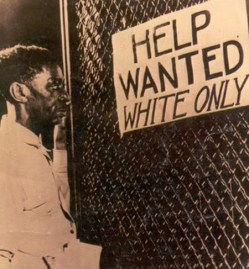
San Leandro is a diverse town.  The latest census numbers show that there about equal numbers of whites, Asians and Latinos in town, African-Americans making another 11% of the population.  You will see this wonderful diversity when you visit our schools, our public library, our parks or community festivities.  You will not see it, however, at City Hall.

Last Monday the City Council carried out a work session on the issue of racial diversity in the city’s workforce.  The city’s Human Resources consultant, Steve Harman,  and the Chief Police, Sandra Spagnoli, both gave very brief presentations about diversity in their departments.  The data they brought was scant but telling.  Sixty one percent of the total City workforce and 62% of the Police force is white.

These numbers, moreover, don’t tell us about the type of jobs held by members of racial minorities in San Leandro.  Are blacks and Latinos working for the city as accountants and public work specialists, or as street cleaners and gardeners? City Hall needs to make this clear.  We do know, however, that there are very few minorities at the upper echelon of city government and that 71% of the last 14 people hired at the city (which included the Chief of Police and the Finance Director) are white.

The situation at the Police Department may be even grimmer.  While Spagnoli did not disclose the number of minority sworn officers, Mike Sobek, the head of the San Leandro Police Officers Association,  spoke during public comments and mentioned that (out of the 90 or so sworn officers) only two are black and two Latino (including himself).  There doesn’t seem to be any Asians.  They did say that 13% of officers are female, while the number might look low it is better than the national average of 8% or so.

Fortunately both Chief Spagnoli and Sobek seem to understand the real importance of diversifying the force.  Spagnoli told the Council that Police forces must reflect the ethnic diversity of the communities they serve, and she’s making changes in the recruitment and promotion process at the SLPD to accomplish this goal.  Spagnoli also wants to get more officers that are bilingual, have college education, special training and live in San Leandro.   Applications for SLPD positions will now be accepted in an ongoing basis, allowing the SLPD to build a richer application pool.  It would help this process, however, if the SLPD posted job openings on their website.  Promotions to sergeant positions will no longer be based entirely on an interview with police higher ups, but on objective criteria as well, and require people from outside the SLPD in the interview panel.  This latter change comes as part of the settlement agreement with the female officers who sued the city for sexual discrimination.

During public comments, Sobek spoke of the need to not just open the process to minority applicants but to specifically recruit them.  He suggested the Police go to colleges with diverse student populations and suggest law enforcement careers to students who might not have considered them before.  Having a Police force which is diverse not only ethnically, but ideologically would likely help in establishing good relations with the community as a whole.

Sobek had many very positive things to say about Spagnoli – in particular he spoke eloquently about how she’s helping the force gain a sense of focus and purpose.  It seems she’s really bringing a level of professionalism the force was lacking.  From the outside, it’s difficult to know how she’s handling the “rotten apple” problems within the SLPD, and as head of the Police Union Sobek is not an unbiased observer, but his words of praise for Spagnoli seemed heartfelt and I’m hoping they reflect a commitment within the SLPD hierarchy and union to create a police force with is both clean and committed to the community they serve.

Back at City Hall, the idea of diversifying the workforce seems to be new and novel at the City management level.  While recruitment of individual positions varies, it seems clear that the city has not done anything to promote job openings among minority populations.  The city does not even advertise its jobs in places like Craigslist, preferring to use the San Leandro Times and its own website.   The City Council, however, seems to be listening to the tolling of the bells and sent the message that they want a more open process.   The Council’s real commitment to diversity will actually be tested in their choice of a new city manager.  Signs so far are encouraging, last month they started the city manager hiring process anew when they couldn’t find a suitable candidate with a good understanding of diversity issues.


Jun 132011
 

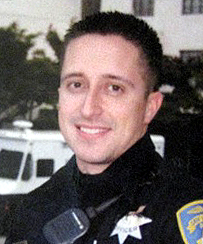
SLPD officers involved in fatal shooting identified.

Anthony Morgan and Ryan Gill have record of police brutality.

The arrest of San Leandro Police Officer Jason Fredriksson for furnishing marijuana to a confidential informant with whom he was having an affair has put the San Leandro Police Department (SLPD) in the spotlight. In its wake, there have been several allegations of misconduct by Fredriksson and other San Leandro police officers. The SLPD has responded with its usual wall of silence and the City Council continues to look the other way. It’s hard to know how deep the problems at the SLPD are, but it’s becoming more and more clear than the Fredriksson case may be the tip of the iceberg.

Gwendolyn Killings

In late December 2010, a San Leandro police officer shot to death Gwendolyn Killings, an African-American woman from Hayward. Killings was driving a car that had been reported stolen earlier in the day; SLPD officers spotted it and chased it until it crashed just after the Oakland border, near the San Leandro city limits. The passenger got out of the car and fled. The two officers got out of their own car;  one officer chased the escaping passenger while the other approached the stopped car. That officer shot and killed Killings while she was in the car. The police would later say that the officer was afraid Killings would put the car in reverse and hit his partner. However, witnesses said the car was boxed in and couldn’t go anywhere. The SLPD has not disputed that account. The case is being investigated by the Oakland police as the shooting happened in Oakland, but no report has been released so far.

The Oakland Police, however, have released documents identifying Ryan Gill and Anthony Morgan as the two SLPD officers involved in the incident. We don’t know at this point which officer shot Killings but both officers have a history of allegations of police misconduct that should concern anyone interested in having a clean police department.

San Leandro Police Officer Ryan Gill

Ryan Gill, 33, is an affable and well-liked officer. He was named San Leandro Officer of the year in April 2011 and is admired for his broad knowledge and as a mentor of younger officers. He started his police career in the Oakland Police Department and was there for 7 years – which casts doubts on how  objectively Oakland PD will investigate their former colleague. In 2003, Gill shot to death an unarmed man. Gill and his partner entered the apartment of the victim while he was sleeping, woke him up and claim they were trying to restraint him when he struggled and tried to get Gill’s gun. Both Gill and his partner shot him. The City of Oakland settled the ensuing lawsuit. In another lawsuit settled by Oakland, Gill was accused of beating a man while arresting him. In a third incident, Gill walked out of a review board conduct hearing where he was to be questioned about a charge of falsely arresting a teenager after his partner ram a car into him.

San Leandro Police Officer Anthony Morgan

Gill’s partner, Anthony Morgan, has spent less time in the press but probably just as much in the courtroom. A quick search of the district court’s database shows two recent lawsuits against Morgan for police brutality. One was settled, but the other one is still open.

Unfortunately, the Killings shooting has not been the only recent killing at the hands of San Leandro Police. In 2005, SLPD officers tasered a man to death; the city settled that lawsuit for nearly $400,000. And Morgan is far from being the only SLPD officer with a history of brutality. Tricia Hynes, the lawyer most often appointed by Meyers Nave to represent the city in litigation, boasts on her webpage of how – thanks to her representation – the City of San Leandro only had to pay a few hundred thousand dollars in damages to seven plaintiffs who were beaten by a dozen SLPD officers while searching a home during a 4th of July party. She is even prouder of another case in which the brutal beating of an unarmed man by SLPD officers only cost the city $20,000.

Gill was hired by then-Police Chief Dale Attarian, an old-style San Leandro cop during whose tenure the City was subjected to multiple lawsuits for civil rights violations, sexual harassment and discrimination and police brutality. Attarian was hired by former City Manager John Jermanis, himself a product of the old-all-white-boys network that ruled San Leandro for decades. Jermanis’ hand-picked successor, Steve Hollister, was a former policeman and did not keep a close eye on the SLPD. Under both men, SPLD officers learned that they could do as they pleased with almost no risk of consequences.

SLPD Chief Sandra Spagnoli

It’s a new day in town, however. Sandra Spagnoli was recently hired as Police Chief with the express purpose of reforming the department – at least ridding it of its culture of sexual harassment. It is too soon to know whether she’ll undertake real, rather than purely cosmetic reforms. So far the indications are mixed – Spagnoli investigated the allegations against Fredriksson, but only after an independent witness had contacted multiple authorities with his accusations. Spagnoli has done nothing to discipline the handler of a police dog that got loose and killed another dog earlier in the year – and Gill was named “officer of the year” after Spagnoli became Chief.

San Leandro needs more than a perhaps-well-intentioned Chief of Police to clean up the Police Department of any criminality or maverick behavior by its officers. It needs elected officials willing to tackle the issue of the police head on. This is hard, because politicians usually kowtow to the police union in order to get their support during elections – Council members Ursula Reed and Joyce Starosciak, in particular, have relied on heavy police support for their campaigns. Starosciak herself is married to an Alameda County Deputy Sheriff.   However, even the strongest police advocates should note that a department that allows criminal behavior and abuse by its members tarnishes both the city and the institution of the police itself.

The City of San Leandro needs to do two things to nip this problem in the bud. One is to appoint a strong City Manager with experience dealing with insubordinate Police Departments. The other is to form a Citizens Police Oversight Commission (aka Review Board) to evaluate complaints of police misconduct, help set hiring practices and discipline standards and act as a liaison with the community. Currently, the city of Oakland is considering following San Francisco in getting private citizens to investigate allegations of Police misconduct, we might want to look into that as well. While Police Officers are protected by an incredibly generous bill of rights, a Citizens Commission could at least identify systematic problems within the police department and push for their resolution.

The question is whether the City Council has the political will to push for a meaningful review of what’s really going on at the Police Department, or whether the powers-that-be in San Leandro will just hope that the community forgets about the recent incidents and pray that there are no big scandals during their term of office.

Jun 092011
 

There is talk around town that San Leandro School Board President, Morgan Mack-Rose, may challenge District 2 Council Member Ursula Reed in the November 2012 elections.   Mack-Rose will neither confirm or deny the rumor.

Both women ran very good campaigns back in 2008 (full disclosure, I actively helped Mack-Rose with her campaign for School Board) – Reed defeated former Council Member and then-current School Board Member Linda Perry, while Mack-Rose easily won over incumbent School Board president Ray Davis.   Both women were new to politics and ran mostly grass roots campaigns, though Reed also benefited from backing by Police, Firefighters, labor and businesses.

Ursula Reed

In recent years, though, Reed has been losing some of her support.   She has developed an inconsistent voting record and has not seemed fully prepared at some City Council meetings.  More importantly, she has shown little leadership despite her recent role as Vice Mayor; I can’t think of a single initiative she has spearheaded.   Personally, I’ve been disappointed with her votes in favor of red-light cameras, action minutes and going forward with the Faith Fellowship case, though I’ve applauded her vote against a permanent ban on medical marijuana dispensaries in San Leandro.

Morgan Mack-Rose

Mack-Rose, meanwhile, has strong progressive credentials and a reputation for dedication and hard work.  While her interests so far have been in schools, her recent appearance at an Education Rally shows her to be an inspiring speaker and practical thinker, which gives her great political potential.   Winning against Reed would be difficult, incumbents tend to win by large margins in San Leandro, but Cassidy showed that it could be done last November and Mack-Rose like challenges.

Still, only time will tell if the rumors are true and if Reed has anything to worry about.

Jun 082011
 

When Mayor Stephen Cassidy announced last March that the city would not be hiring a search firm to look for a new City Manager, I was not the only one to speculate that the Mayor had someone in mind for the job.   Generally these types of low-intensity searches are only conducted when a viable internal candidate has already been identified, but none of the likely candidates in San Leandro had expressed any interest in the job.  The manner in which the “search” was conducted  – in secrecy, with no community input to speak of and with the search committee keeping completely mum about the candidates – further strengthened these suspicions.  Add to this the rumors that a well-known local business lobbyist with ties to Cassidy had been approaching City Council members praising the virtues of the City Manager of a nearby town, and it’s not hard to add 2 and 2 together.  Cassidy had his man for the job – and he seemed willing to railroad the City Council into accepting him.

Cassidy’s candidate did not look bad on paper – he had ties to San Leandro and had done a reasonably OK job of managing the prosperous, predominantly white city he’d been in charge of for six years.  He had come into some recent troubles, over the issue of employee pension contributions no less, but Cassidy would probably see that as a plus.  In any case, for reasons unknown, he withdrew his application before it could be considered by the full Council.

The City Council was left to interview 4 or 5 other candidates.   By all accounts they were a diverse group, though not necessarily a competent one.  The low key search, and the likely presumption among potential candidates that the results were predetermined, had not encouraged top-CM candidates to submit their applications.   Cassidy still had a favorite among this group – the young city manager of a nearby city with a population one-fourth the size of San Leandro’s and a median household income twice as high as our own.  Managing a city with a population less than 6% Latino and 1% black, it’s no wonder that he fumbled the “diversity” question and left several City Council members unimpressed.  But Cassidy wanted him and fought for him until finally accepting last night that he would not get his way.

So the City Council is back to square one: needing to find a City Manager.  This time they are ready to do it right: hire a search firm, which will make a broad, hopefully nation-wide search, and recruit candidates with experience running cities with diverse populations and changing economic structures.  San Leandro has much to offer to the right candidate: we are a pleasant town, with a wonderful weather, relatively low-crime and a cohesive, if diverse, population.  Our problems: fixing our schools, establishing a long-term balanced budget and enhancing the standard of living of residents, are tough but not insurmountable.  This is the sort of town where someone with a modicum of competence and inspiration can make a name for herself.  We just need to find the right person, it looks like we’re finally looking.